Bagaimana cara mendapatkan dan berlangganan majalah Poultry Indonesia?
Bagaimana cara membayar pesanan majalah Poultry Indonesia?
Apa itu Advertorial?
Bagaimana cara memasang iklan di website Poultry Indonesia?
Dari mana referensi informasi dalam majalah poultry indonesia?
Dengan siapa saya bisa bertanya seputar kesehatan, penyakit terkait unggas?
Apa itu Poultry Events?
Dengan siapa saya bisa ingin mengajukan kerjasama media partner atau mengadakan suatu kegiatan?
Apa itu Poultry Indonesia?
Poultry Indonesia merupakan majalah yang didirikan pada tahun 1979 di Jakarta, dan menjadi majalah pertama dan tertua di Indonesia yang memiliki ulasan khusus mengenai perunggasan.
Referensi informasi yang tersaji dalam majalah Poultry Indonesia tidak hanya tercakup dalam negeri saja, Poultry Indonesia telah menjalin kerjasama dengan berbagai pihak luar negeri untuk menyajikan informasi terkait perkembangan perunggasan di luar Indonesia.
Poultry Indonesia terdiri dari sekelompok orang yang memiliki dedikasi dan apresiasi tinggi terhadap pekerjaan mereka, dengan senantiasa selalu menyajikan sebuah majalah yang layak dibaca oleh masyarakat perunggasan.
Kapan Majalah Poultry terbit?
Majalah Poultry Indonesia terbit per bulan pada minggu ke-2 dan memiliki dua belas edisi setiap tahun.
Bagaimana cara mendapatkan dan berlangganan majalah Poultry Indonesia?
Majalah Poultry Indonesia tersedia di Toko Buku Gramedia namun dengan kuantiti terbatas. Anda bisa juga langsung membeli dengan menghubungi Poultry Indonesia melalui:
Advertorial adalah artikel yang dimuat di media massa dengan cara membayar yang bertujuan untuk promosi.
Selain itu juga advertorial bisa diartikan sebagai iklan yang disusun atau dibuat sedemikian rupa
sehingga seperti sebuah artikel yang dikarang oleh media cetak yang bersangkutan.
Bagaimana cara memasang iklan di website Poultry Indonesia?
Untuk dapat memasang iklan pada Website Poultry Indonesia dapat menghubungi Divisi Iklan melalui Email:
Darimana referensi informasi dalam majalah poultry indonesia?
Referensi informasi yang tersaji dalam majalah Poultry Indonesia tidak hanya tercakup dalam negeri saja, Poultry Indonesia telah menjalin
kerjasama dengan berbagai pihak luar negeri untuk menyajikan informasi terkait perkembangan perunggasan di luar Indonesia.
Koresponden Luar Negri:
Elis Helinna (New York, Amerika Serikat)
Koresponden Dalam Negeri:
Boy Gunawan Agustino (Tegal),
Muhrishol Yafi (Sidoarjo),
Mahardika Agil Bimasono (Yogyakarta), Sri Maulidini (Purwokerto),
Tri Okto Sareji Adytia (Poso).
Dengan siapa saya bisa bertanya seputar kesehatan, penyakit terkait unggas?
Heat stress (HS) remains one of the most critical challenges in poultry production, especially in tropical regions. It directly affects productivity, animal health, and ultimately farm profitability.
What is Heat Stress?
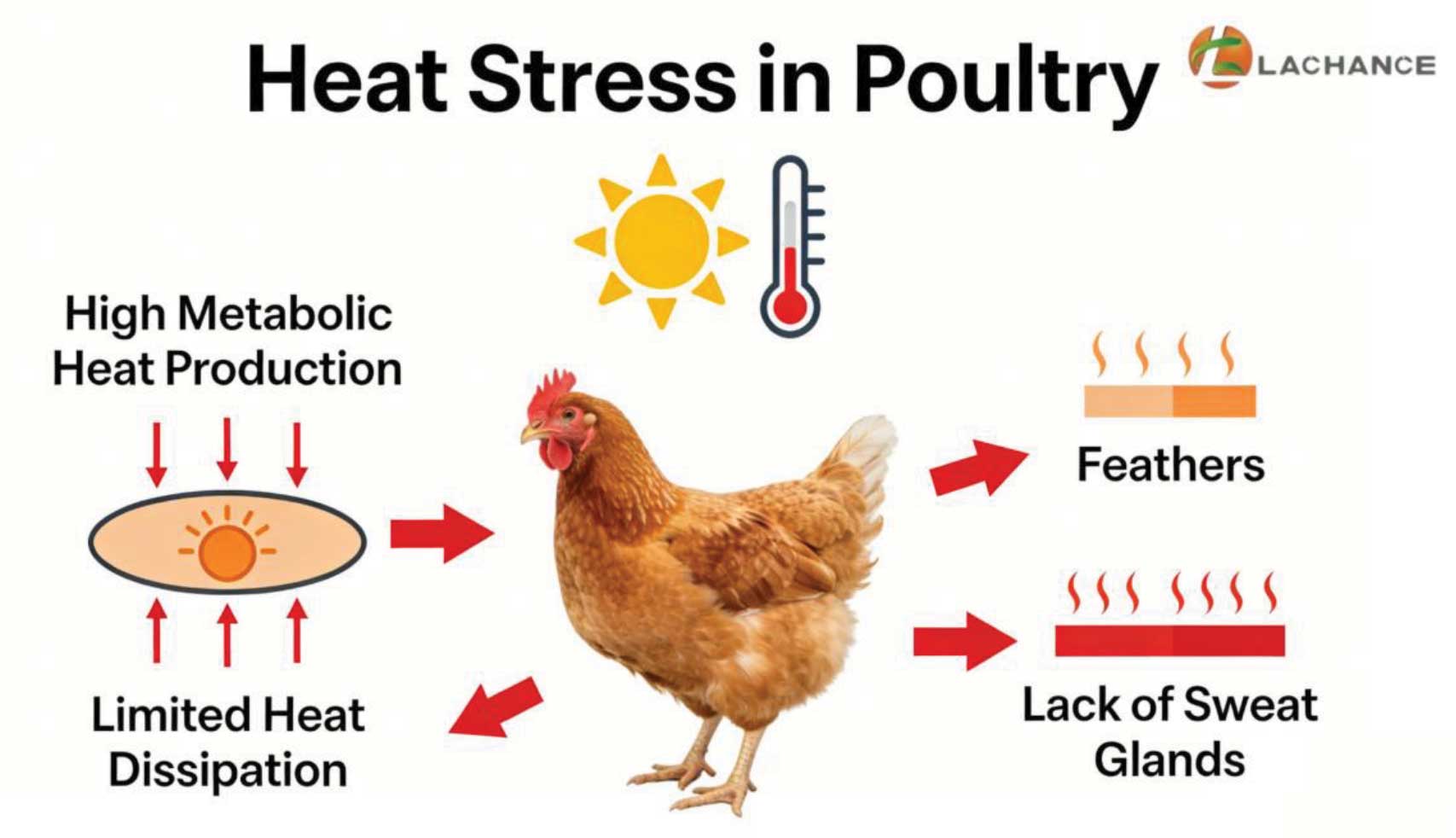
Heat stress occurs when poultry are unable to balance internal heat production with heat dissipation to the environment.
Birds are particularly vulnerable due to several biological characteristics:
They do not have sweat glands
Their bodies are covered with feathers
They generate relatively high metabolic heat
When environmental temperatures exceed the thermoneutral zone, birds rely on physiological responses such as panting to release excess heat. However, this mechanism often comes at the cost of reduced production performance.
Signs and Impact on Production
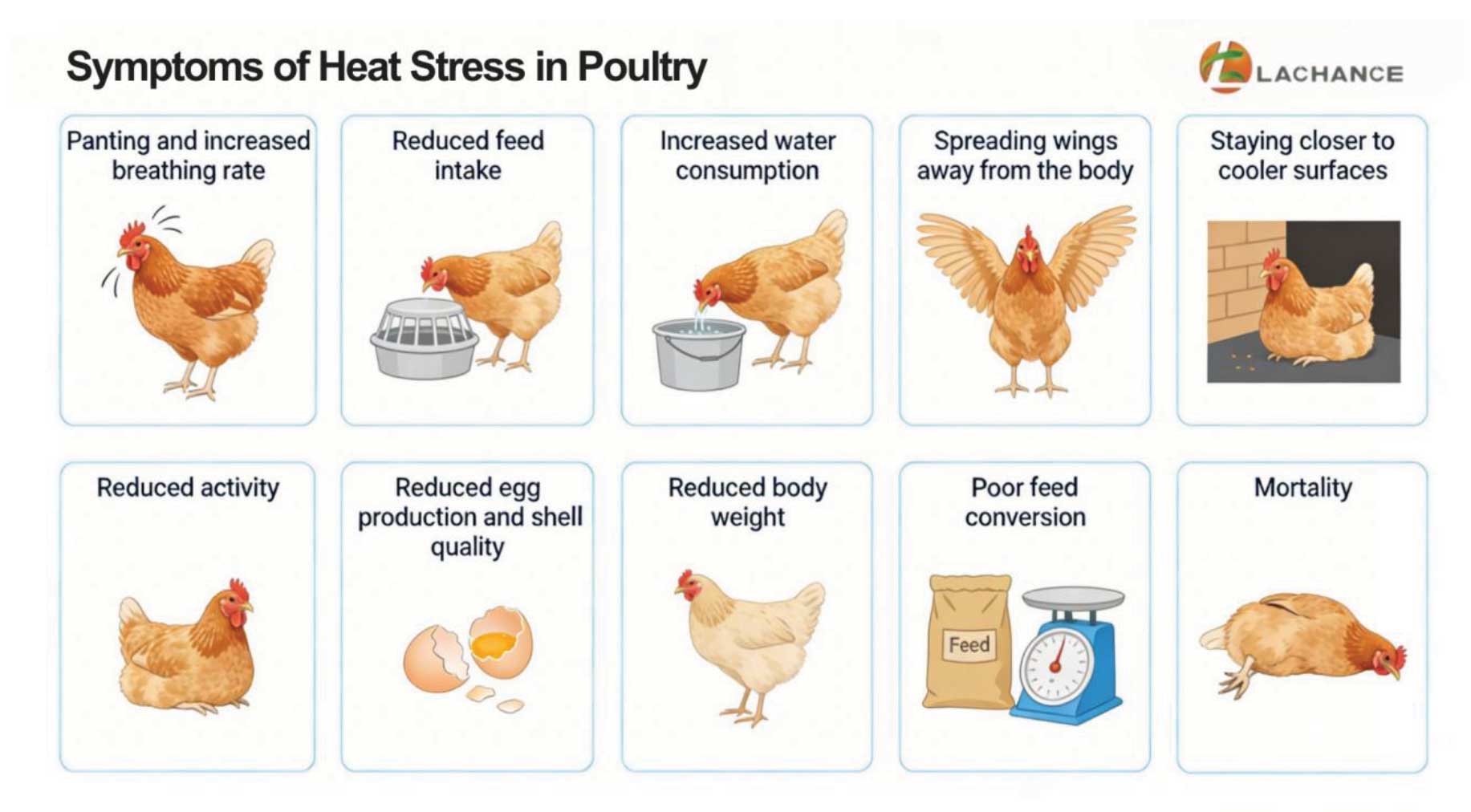
Early signs of heat stress include:
Panting with increased respiratory rate
Reduced feed intake
Increased water consumption
Lower activity levels and wings held away from the body
Impacts on production:
↓ Reduced growth rate, egg production, and feed efficiency (FCR)
↓ Poor eggshell quality due to calcium imbalance
↑ Increased fat deposition, lowering meat quality
↓ Weakened immune response and reduced fertility
↑ Higher mortality rates in chronic heat stress cases
Nutritional Strategies to Mitigate Heat Stress
Proper nutritional management plays a key role in minimizing the effects of heat stress. Practical strategies include:
Providing feed during cooler periods (early morning or evening)
Increasing dietary energy density (e.g., adding fat)
Reducing crude protein while maintaining balanced amino acids
Supplementing vitamins and electrolytes (vitamin C, vitamin E, selenium, potassium)
Ensuring continuous access to clean, cool drinking water
Runeon® Bile Acids: Supporting Liver Function Under Heat Stress
Under heat stress conditions, maintaining liver function and efficient fat metabolism becomes essential to sustain performance.
Runeon® Bile Acids offer a metabolic-level solution by supporting digestion and liver health.
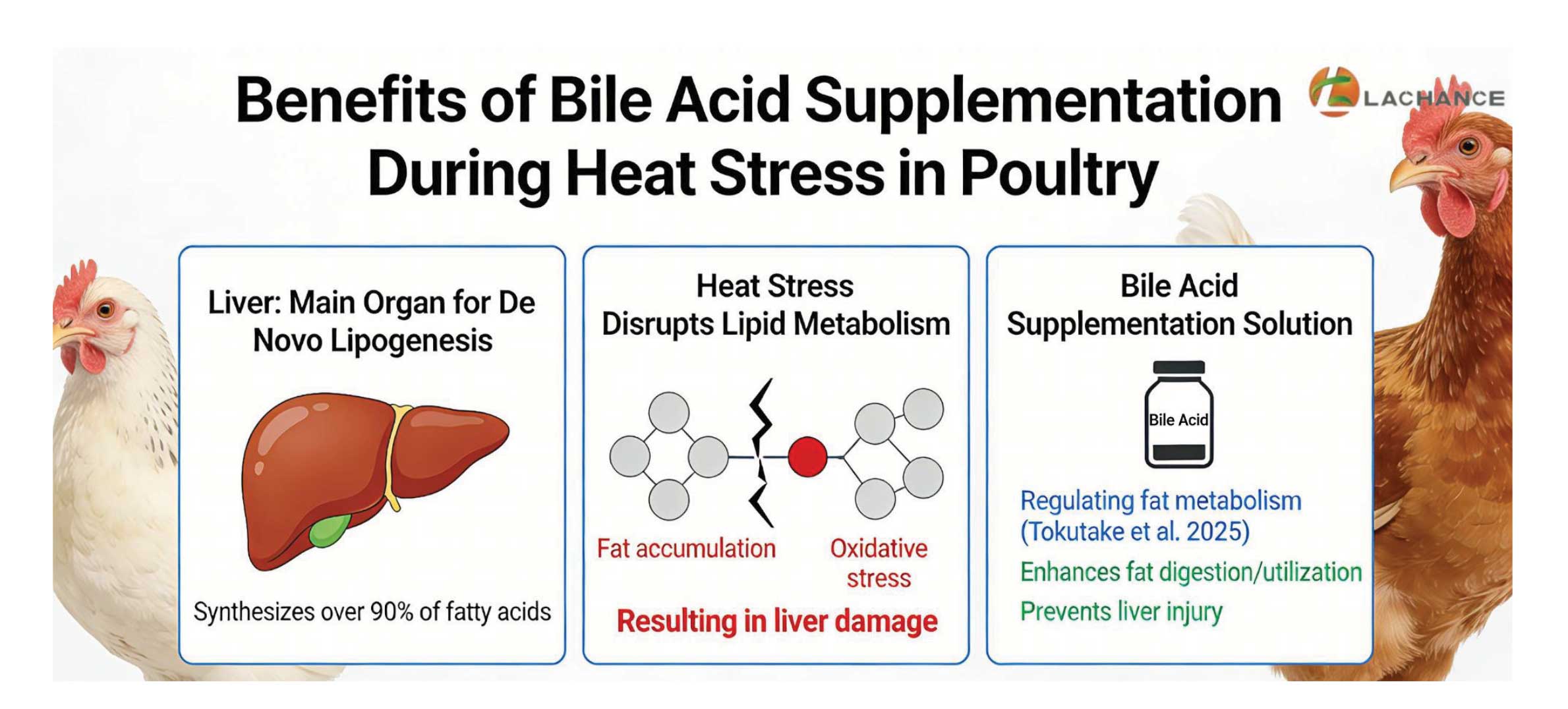
Field observations and research indicate that bile acids can:
Improve fat digestion and energy utilization, helping offset reduced feed intake
Reduce fat accumulation in the liver and maintain liver integrity
Regulate lipid metabolism via the FXR pathway, limiting excessive fat synthesis
Enhance antioxidant capacity, reducing oxidative stress caused by heat stress
Unlike conventional nutritional adjustments that focus on increasing nutrient supply, bile acids work directly at the metabolic level—ensuring nutrients are utilized more efficiently rather than simply added in greater amounts.







 When environmental temperatures exceed the thermoneutral zone, birds rely on physiological responses such as panting to release excess heat. However, this mechanism often comes at the cost of reduced production performance.
 Nutritional Strategies to Mitigate Heat Stress
 Field observations and research indicate that bile acids can: