Bagaimana cara mendapatkan dan berlangganan majalah Poultry Indonesia?
Bagaimana cara membayar pesanan majalah Poultry Indonesia?
Apa itu Advertorial?
Bagaimana cara memasang iklan di website Poultry Indonesia?
Dari mana referensi informasi dalam majalah poultry indonesia?
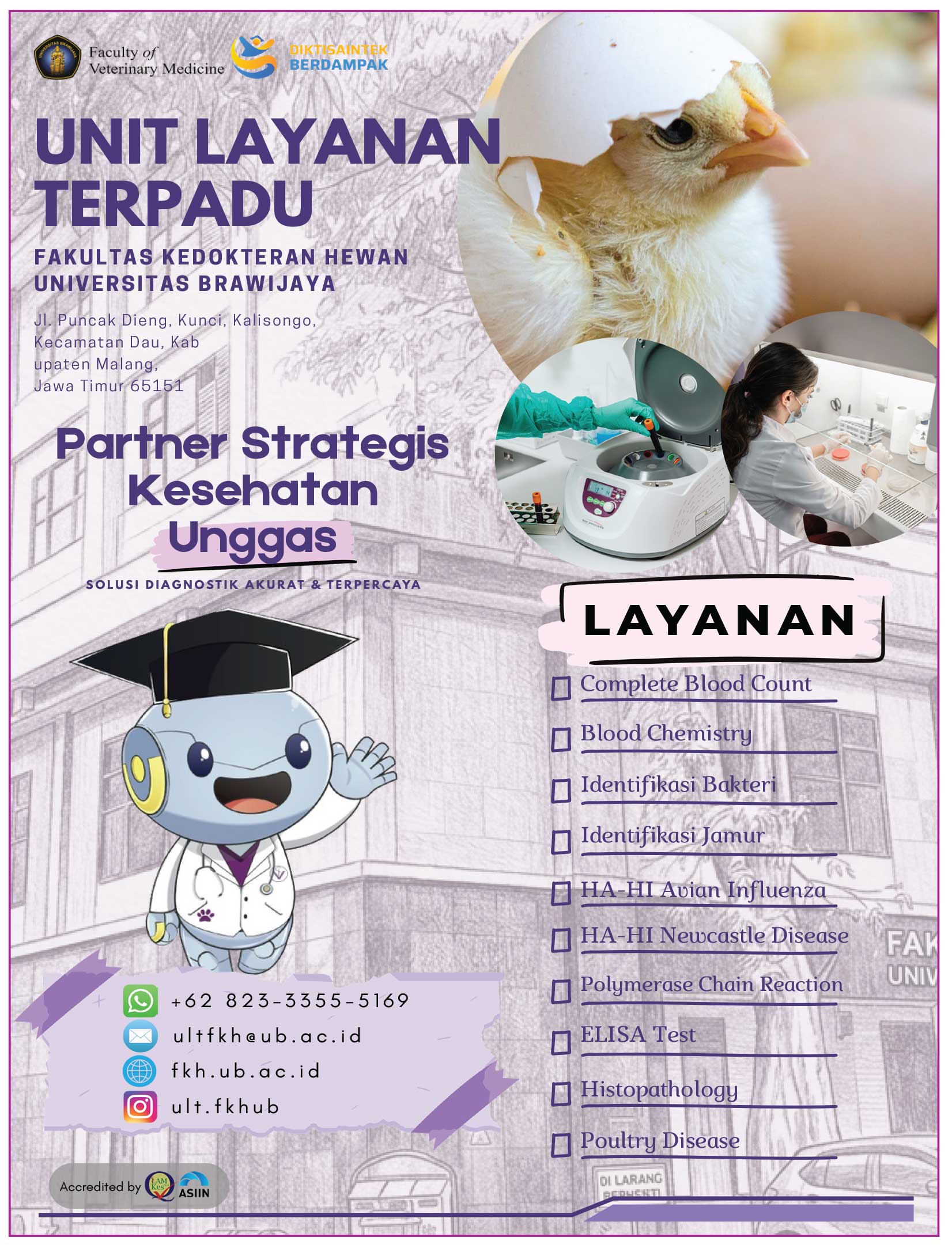
Dengan siapa saya bisa bertanya seputar kesehatan, penyakit terkait unggas?
Apa itu Poultry Events?
Dengan siapa saya bisa ingin mengajukan kerjasama media partner atau mengadakan suatu kegiatan?
Apa itu Poultry Indonesia?
Poultry Indonesia merupakan majalah yang didirikan pada tahun 1979 di Jakarta, dan menjadi majalah pertama dan tertua di Indonesia yang memiliki ulasan khusus mengenai perunggasan.
Referensi informasi yang tersaji dalam majalah Poultry Indonesia tidak hanya tercakup dalam negeri saja, Poultry Indonesia telah menjalin kerjasama dengan berbagai pihak luar negeri untuk menyajikan informasi terkait perkembangan perunggasan di luar Indonesia.
Poultry Indonesia terdiri dari sekelompok orang yang memiliki dedikasi dan apresiasi tinggi terhadap pekerjaan mereka, dengan senantiasa selalu menyajikan sebuah majalah yang layak dibaca oleh masyarakat perunggasan.
Kapan Majalah Poultry terbit?
Majalah Poultry Indonesia terbit per bulan pada minggu ke-2 dan memiliki dua belas edisi setiap tahun.
Bagaimana cara mendapatkan dan berlangganan majalah Poultry Indonesia?
Majalah Poultry Indonesia tersedia di Toko Buku Gramedia namun dengan kuantiti terbatas. Anda bisa juga langsung membeli dengan menghubungi Poultry Indonesia melalui:
Advertorial adalah artikel yang dimuat di media massa dengan cara membayar yang bertujuan untuk promosi.
Selain itu juga advertorial bisa diartikan sebagai iklan yang disusun atau dibuat sedemikian rupa
sehingga seperti sebuah artikel yang dikarang oleh media cetak yang bersangkutan.
Bagaimana cara memasang iklan di website Poultry Indonesia?
Untuk dapat memasang iklan pada Website Poultry Indonesia dapat menghubungi Divisi Iklan melalui Email:
Darimana referensi informasi dalam majalah poultry indonesia?
Referensi informasi yang tersaji dalam majalah Poultry Indonesia tidak hanya tercakup dalam negeri saja, Poultry Indonesia telah menjalin
kerjasama dengan berbagai pihak luar negeri untuk menyajikan informasi terkait perkembangan perunggasan di luar Indonesia.
Koresponden Luar Negri:
Elis Helinna (New York, Amerika Serikat)
Koresponden Dalam Negeri:
Boy Gunawan Agustino (Tegal),
Muhrishol Yafi (Sidoarjo),
Mahardika Agil Bimasono (Yogyakarta), Sri Maulidini (Purwokerto),
Tri Okto Sareji Adytia (Poso).
Dengan siapa saya bisa bertanya seputar kesehatan, penyakit terkait unggas?
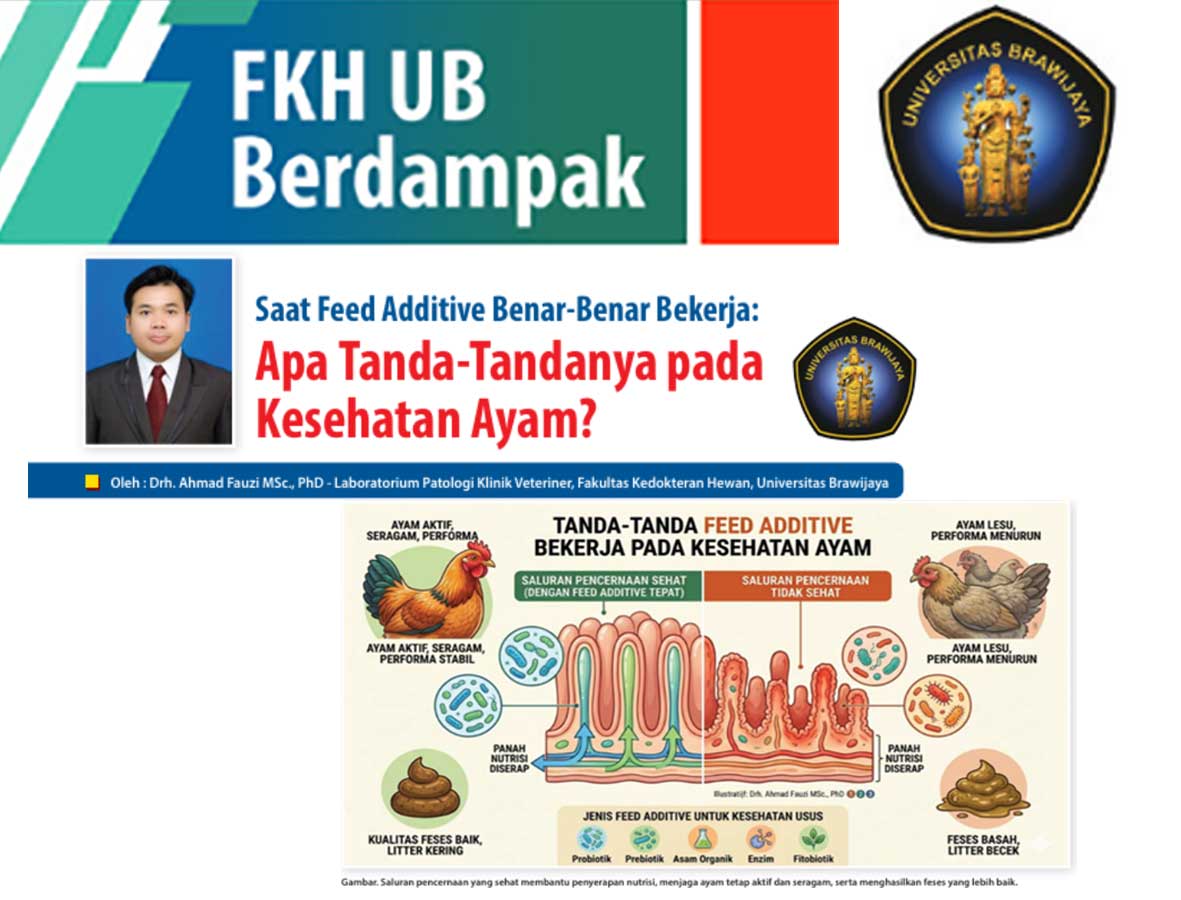
In the modern poultry industry, the use of feed supplements has become an important part of production management strategies. Various products are marketed with claims of improving growth, feed efficiency, immune response, and overall bird performance in facing environmental and management challenges. However, an important question often arises: when can a feed supplement truly be considered effective?
So far, its benefits have often been judged solely from final performance results, such as increased body weight, improved feed conversion ratio, or stable egg production. In fact, before these outcomes become visible, changes in the birds’ condition usually appear first. These early signs are important indicators in evaluating whether a feed supplement is genuinely providing benefits.
The digestive tract is usually the first area to show noticeable changes. Proper use of feed additives can help stabilize digestion, which can be observed through improved fecal quality, drier litter conditions, more consistent feed intake patterns, and better flock uniformity. These changes may not immediately be reflected in production figures, but they indicate that the intestinal system is functioning more efficiently.
The digestive tract plays a major role in nutrient absorption. When its function is disrupted, feed efficiency declines and birds become more susceptible to stress and disease. Therefore, feed additives such as probiotics, prebiotics, organic acids, enzymes, and phytobiotics are widely used to help maintain intestinal balance, allowing digestion and nutrient absorption processes to function more effectively.
Beyond the digestive system, the benefits of feed additives can also be observed in the birds’ overall physiological condition.
When Feed Additives Truly Work: What Are the Signs in Poultry Health?
Birds with more stable body conditions generally appear calmer, more uniform, and better able to maintain performance. In the field, this can be seen in birds that remain active, maintain feed consumption without drastic declines, and show relatively even growth rates. Good intestinal health is also closely associated with stronger immunity, enabling birds to better withstand management stress and health challenges.
Ultimately, the effectiveness of feed additives should be evaluated based on the birds’ actual responses, rather than solely on product labels or marketing testimonials. Simple indicators such as appetite, fecal quality, litter condition, flock uniformity, and reduced digestive disorders can serve as important early signs. These observations can then be supported by performance data such as growth rate, feed conversion ratio, egg production, and mortality levels.
Nevertheless, the effectiveness of feed additives is influenced by many factors, including product quality, dosage, bird age, environmental conditions, and overall farm management. Therefore, feed additives should be viewed as part of a comprehensive management system. When used properly and supported by good management practices, their benefits will be reflected in healthier, more stable, and sustainably productive birds.
References
Janocha, A., Milczarek, A., Kosmalski, M., Gajownik-Mućka, P., & Radzikowski, D. (2022). Effect of feed additives.
Rajput, A. R., Jamali, I., Laghari, R. B., Arain, A. S., Soomro, M. H., & Laghari, F. A. (2024). Role of feed additives on the health and performance of poultry. In R. Z. Abbas, T. Akhtar, R. Asrar, A. M. A. Khan, & Z. Saeed (Eds.), Complementary and Alternative Medicine: Feed Additivesa (pp. 42–50). Unique Scientific Publishers. https://doi.org/10.47278/book.CAM/2024.194
Ren, J., Ren, S., Yang, H., & Ji, P. (2025). Effects of phytogenic feed additive on production performance, slaughtering performance, meat quality, and intestinal flora of white-feathered broilers. Veterinary Sciences, 12(5), 396. https://doi.org/10.3390/vetsci12050396