



POULTRYINDONESIA, Blitar – The government is preparing an integration scheme involving corn farmers, livestock producers, cooperatives, and the State Logistics Agency (Bulog) to maintain feed ingredient availability and anticipate price fluctuations. Through a mechanism for absorbing harvested corn and storing it in warehouses, stocks are expected to be made available to livestock farmers when market supplies become limited.
Minister of Agriculture Andi Amran Sulaiman stated that the scheme is part of a broader plan to develop an integrated livestock ecosystem from upstream to downstream. The policy is also a follow-up to concerns raised by representatives of livestock farmers from various regions who previously brought their business challenges to the government’s attention.
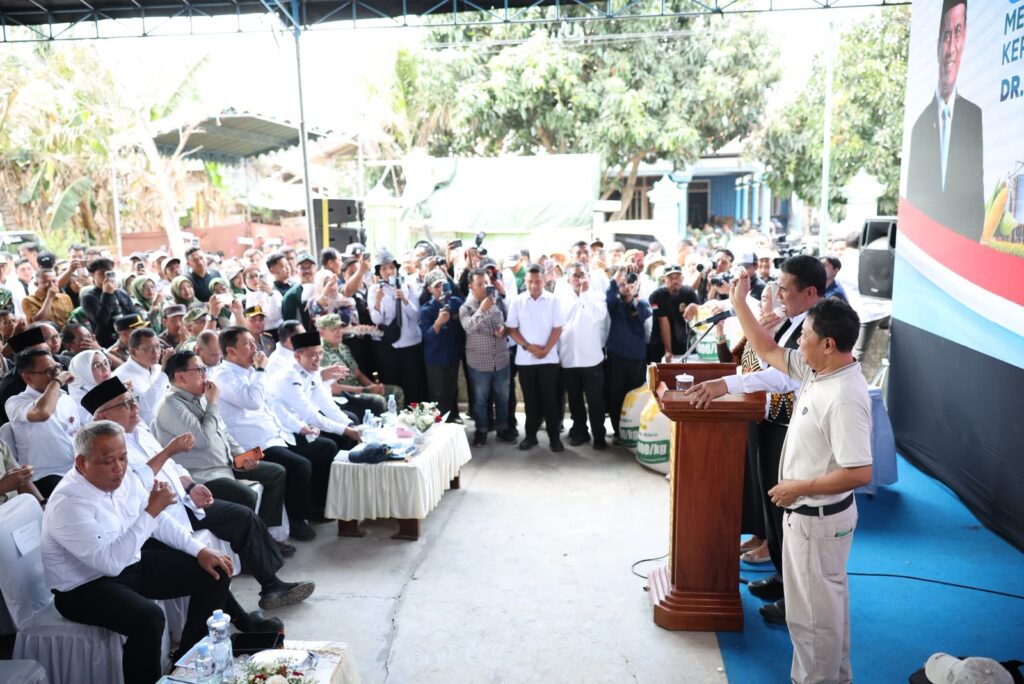
“Today, we are fulfilling our promise. After more than a thousand representatives of livestock farmers from across Indonesia came to Jakarta to meet with us, we planned to develop a livestock ecosystem going forward. We will start from upstream to downstream,” Amran said during a working visit to Blitar, East Java, on Thursday (November 5).
Under the proposed scheme, corn farmers will be connected with cooperatives and livestock producers as part of an integrated supply chain. When production is abundant, Bulog will purchase the surplus corn and store it through a warehouse receipt system. The stocks can subsequently be accessed by livestock farmers when supplies become limited, particularly during the September–November period.
“Corn will be planted, and livestock farmers will serve as the offtakers. If there is a surplus, Bulog will purchase the corn and store it under the warehouse receipt system. When the lean season arrives in September, October, and November, livestock farmers who are part of the partnership can retrieve the corn from Bulog. This will create an ecosystem and provide a permanent solution,” he explained.
Amran added that cooperatives would serve as the link between corn farmers and livestock producers. Existing cooperatives would not need to be dissolved or replaced but instead strengthened to accommodate feed ingredient requirements while helping market farmers’ harvests.
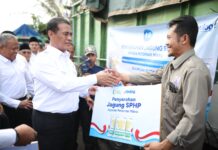
Corn supply support through the Food Supply and Price Stabilization Program (SPHP) has also previously reached several livestock farmers. Zainuddin, Chairman of the Anjuk Ladang Makmur Cooperative in Nganjuk Regency, said the corn assistance had helped members cope with rising raw material prices in the market.
“Commercial feed prices keep increasing without any compromise. Corn on the open market has now reached Rp7,800 per kilogram, while SPHP corn is available at just Rp5,500 per kilogram. This is a tremendous help to us as livestock farmers,” he said.
Nevertheless, Zainuddin hopes that corn supply support will not stop at distribution during periods of high prices. He also requested an increase in the assistance quota for the following year. According to him, rising feed costs need to be accompanied by adequate egg selling prices to ensure the sustainability of livestock businesses.
“Our first hope is that since commercial feed prices continue to rise, any increase in feed costs should be balanced by higher egg prices. The Minister has also stated that egg prices must not fall below the stipulated level of Rp24,000 per kilogram,” he said.
To support the implementation of the program, Amran stated that the government had reallocated approximately Rp3.7 trillion in budget funds for corn farmers and livestock producers. The funds came from reductions in expenditures considered less urgent priorities, including hotel seminars, visits, official travel, and office expenses.
“We have reallocated approximately Rp3.7 trillion in total for livestock farmers and corn farmers. This is for the benefit of Indonesia’s farmers and livestock producers,” he stressed.
In addition to corn supply issues, the government also highlighted egg distribution and trading practices, which are considered to have failed to ensure balanced prices throughout the supply chain. Amran pointed to situations in which egg prices at the farm level decline while consumer prices remain relatively high. The government stated that it would monitor the issue and coordinate with law enforcement authorities if any trading practices were found to violate regulations.
“Do not take advantage of our farmers and livestock producers. Just imagine: egg prices are falling at the farm level, while consumer prices remain high,” he said.
The integration scheme involving corn farmers, cooperatives, livestock producers, and Bulog represents one of the government’s efforts to address feed ingredient supply challenges. However, its effectiveness will depend largely on procurement mechanisms, storage capacity, distribution accuracy, and farmers’ access to available corn stocks. Given the significant contribution of feed costs to overall production expenses, reliable supplies at competitive prices remain essential to the sustainability of livestock businesses.
Get more information about Indonesia’s poultry industry by joining the Satwa Media Group WhatsApp Channel.