Bagaimana cara mendapatkan dan berlangganan majalah Poultry Indonesia?
Bagaimana cara membayar pesanan majalah Poultry Indonesia?
Apa itu Advertorial?
Bagaimana cara memasang iklan di website Poultry Indonesia?
Dari mana referensi informasi dalam majalah poultry indonesia?
Dengan siapa saya bisa bertanya seputar kesehatan, penyakit terkait unggas?
Apa itu Poultry Events?
Dengan siapa saya bisa ingin mengajukan kerjasama media partner atau mengadakan suatu kegiatan?
Apa itu Poultry Indonesia?
Poultry Indonesia merupakan majalah yang didirikan pada tahun 1979 di Jakarta, dan menjadi majalah pertama dan tertua di Indonesia yang memiliki ulasan khusus mengenai perunggasan.
Referensi informasi yang tersaji dalam majalah Poultry Indonesia tidak hanya tercakup dalam negeri saja, Poultry Indonesia telah menjalin kerjasama dengan berbagai pihak luar negeri untuk menyajikan informasi terkait perkembangan perunggasan di luar Indonesia.
Poultry Indonesia terdiri dari sekelompok orang yang memiliki dedikasi dan apresiasi tinggi terhadap pekerjaan mereka, dengan senantiasa selalu menyajikan sebuah majalah yang layak dibaca oleh masyarakat perunggasan.
Kapan Majalah Poultry terbit?
Majalah Poultry Indonesia terbit per bulan pada minggu ke-2 dan memiliki dua belas edisi setiap tahun.
Bagaimana cara mendapatkan dan berlangganan majalah Poultry Indonesia?
Majalah Poultry Indonesia tersedia di Toko Buku Gramedia namun dengan kuantiti terbatas. Anda bisa juga langsung membeli dengan menghubungi Poultry Indonesia melalui:
Advertorial adalah artikel yang dimuat di media massa dengan cara membayar yang bertujuan untuk promosi.
Selain itu juga advertorial bisa diartikan sebagai iklan yang disusun atau dibuat sedemikian rupa
sehingga seperti sebuah artikel yang dikarang oleh media cetak yang bersangkutan.
Bagaimana cara memasang iklan di website Poultry Indonesia?
Untuk dapat memasang iklan pada Website Poultry Indonesia dapat menghubungi Divisi Iklan melalui Email:
Darimana referensi informasi dalam majalah poultry indonesia?
Referensi informasi yang tersaji dalam majalah Poultry Indonesia tidak hanya tercakup dalam negeri saja, Poultry Indonesia telah menjalin
kerjasama dengan berbagai pihak luar negeri untuk menyajikan informasi terkait perkembangan perunggasan di luar Indonesia.
Koresponden Luar Negri:
Elis Helinna (New York, Amerika Serikat)
Koresponden Dalam Negeri:
Boy Gunawan Agustino (Tegal),
Muhrishol Yafi (Sidoarjo),
Mahardika Agil Bimasono (Yogyakarta), Sri Maulidini (Purwokerto),
Tri Okto Sareji Adytia (Poso).
Dengan siapa saya bisa bertanya seputar kesehatan, penyakit terkait unggas?
POULTRYINDONESIA, Jakarta – The Ministry of Agriculture (MoA) is urging the animal feed industry to maintain feed price stability and give smallholder farmers room to sustain their businesses amid ongoing pressure on chicken and egg prices at the producer level.
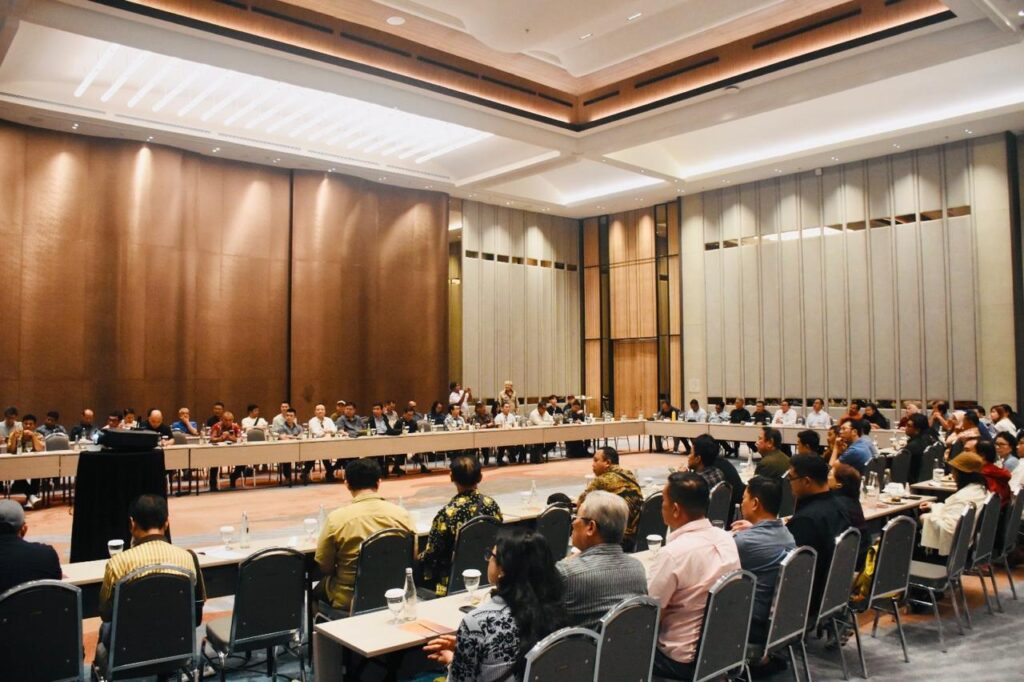
The request was conveyed by Director General of Livestock and Animal Health at the MoA, Agung Suganda, during a poultry coordination meeting with feed companies and industry stakeholders on Wednesday (November 25, 2026).
Agung highlighted that chicken and egg prices at the farm level remain under pressure, while prices at the consumer level have not declined proportionately. In several regions, eggs and poultry products have even continued to be recorded as commodities contributing to inflationary pressures.
According to Agung, the situation underscores the need for joint improvements across the poultry supply chain, from upstream to downstream. During the meeting, he called on feed companies to refrain from raising feed prices until chicken and egg prices at the farm level improve. He also urged the industry to strengthen solidarity and provide room for poultry businesses to remain sustainable.
“The feed industry needs to give poultry businesses room to remain sustainable. We are asking feed price increases to be put on hold until chicken and egg prices at the farm level return to a more favorable condition,” Agung said.
Agung emphasized that supporting farmers is a fundamental consideration in the government’s efforts to reorganize the poultry industry. He said that if the feed industry works together to maintain stability, the pressures currently faced by farmers will be easier to address.
Chairwoman of the Indonesian Feedmills Association (GPMT), Tevi Melviana, acknowledged that depressed chicken and egg prices are among the main challenges currently facing the poultry sector.
“The main issue now is that prices of poultry products, both chicken meat and eggs, remain unfavorable. In other words, they are still below production costs,” Tevi said.
She said the industry had received guidance to temporarily refrain from raising feed prices. Tevi acknowledged that this would not be an easy step for feed manufacturers, but emphasized that the current situation calls for willingness, mutual understanding, and empathy among all stakeholders to work together.
“For the industry, maintaining feed prices without increases is indeed difficult. However, to keep the poultry sector in a conducive condition, we will follow the guidance, even though it is challenging,” Tevi said.
Regarding the proposed zoning system for corn procurement, Tevi said the initiative was viewed positively as a way to help reduce price fluctuations. However, its implementation would need to take into account each company’s circumstances, including sourcing distances, transportation costs, warehouse capacity, and financial capabilities.
“The objective is good, to prevent prices from soaring or fluctuating. The proposal is constructive, but we still need to discuss with our members whether the mechanism can be implemented,” she said.
The MoA will continue monitoring the implementation of these commitments. For industry players who fail to heed collective efforts to maintain poultry sector stability, the government will take measured action within its authority and in accordance with applicable regulations.
The MoA hopes to strengthen synergy among the government, feed industry, integrators, associations, and farmers to maintain national poultry sector stability without compromising the sustainability of smallholder farming businesses.