



By: Heri Irawan, Lecturer at the Faculty of Veterinary Medicine, Universitas Brawijaya
Digestive disorders in poultry often pose a serious threat to farming operations, even becoming a routine issue that quietly erodes profits. One of the most detrimental parasitic diseases—and a persistent challenge in both broiler and layer farms across Indonesia—is coccidiosis. Unlike viral diseases, coccidiosis is highly dependent on environmental conditions, particularly litter quality. While mortality in infected birds can rise sharply, the greatest economic losses actually stem from decreased performance in surviving chickens, reflected in worsening Feed Conversion Ratio (FCR).
Current Situation of Coccidiosis in Indonesia
Following the ban on Antibiotic Growth Promoters (AGP) in Indonesia, controlling enteric diseases such as coccidiosis has become increasingly challenging. Various studies and recent field reports indicate that the prevalence of Eimeria spp. infections remains very high in commercial poultry farming centers across the country. For instance, prevalence in West Nusa Tenggara reached 52.5% (Agustin & Ningtyas, 2020). Further research in broiler partnerships in Southeast Sulawesi confirms that coccidiosis remains a major threat, exacerbated by high humidity and poor ventilation systems (Cs et al., 2025). The accumulation of parasitic agents in Indonesia’s warm and humid tropical climate makes sanitation an uncompromising frontline defense.
Understanding and Clinical Detection
Coccidiosis is caused by protozoan infection from the genus Eimeria, transmitted via the fecal-oral route when chickens ingest infective oocysts from litter. Several highly pathogenic species commonly found in Indonesia include Eimeria tenella and Eimeria maxima.
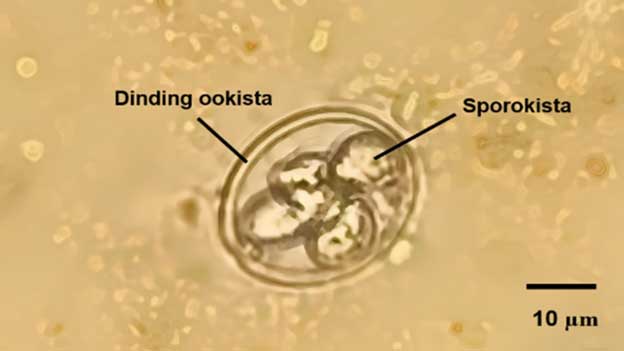 Early clinical signs often go unnoticed, including reduced appetite, lethargy, and dull feathers. In severe E. tenella infections, farmers may observe bloody droppings in the housing area. A recent pathology report from a commercial farm in Bali confirmed intestinal necrosis caused by severe E. tenella infection, with parasite loads reaching 188,600 oocysts per gram (OPG) of feces, triggering high mortality rates (Putra et al., 2025).
During necropsy, organ changes are clearly visible, including petechiae, swelling, and blood clots in the cecum. For academic and medical diagnostic standards, the severity of lesions is measured using the Lesion Scoring method (Johnson & Reid, 1970).
Resistance Threat and Control Strategies
The use of anticoccidial drugs mixed into feed is a conventional control method. However, growing concern surrounds drug resistance. Field evidence shows that Eimeria has developed resistance due to continuous use of the same drug class at improper dosages. As a result, modern poultry systems are increasingly seeking chemical-free alternatives.
Global academic reviews highlight that reducing Eimeria populations through phytochemical or herbal supplementation is becoming an effective alternative to minimize resistance (Gawel et al., 2023). This aligns with recent in vitro research at the Faculty of Veterinary Medicine, Universitas Brawijaya, which demonstrated that powdered extracts of Sambiloto (Andrographis paniculata) and Mengkudu (Morinda citrifolia) have significant potential as natural anticoccidial agents, capable of drastically reducing oocyst counts (Yesica et al., 2025).
Nevertheless, as long as synthetic drugs are still used, farmers must understand rotation programs. There are two main classes of conventional anticoccidials:
-
Chemicals/Synthetics: rapidly kill parasites
-
Ionophores: allow limited parasite survival to stimulate natural immunity (Huvepharma, 2020)
To prevent resistance:
-
Shuttle Program: Use two different anticoccidial classes within the same production cycle (e.g., chemicals in starter phase, ionophores in finisher phase).
-
Rotation Program: Completely switch anticoccidial types in the next cycle. Avoid rotating products with different brands but the same active ingredient class.
Long-Term Prevention Plan
| No | Step | Required Action |
|---|---|---|
| 1 | Routine Diagnosis | Monitor fecal condition; conduct necropsy or lab tests (OPG) for early detection |
| 2 | Litter Management | Prevent moisture buildup; fix leaks, adjust drinker height, remove caked litter |
| 3 | Strict Biosecurity | Limit traffic; mechanically clean equipment as oocysts resist many disinfectants |
| 4 | Vaccines & Alternatives | Transition to coccidiosis vaccines or standardized herbal solutions |
Integrated Biosecurity and Immunity Approach
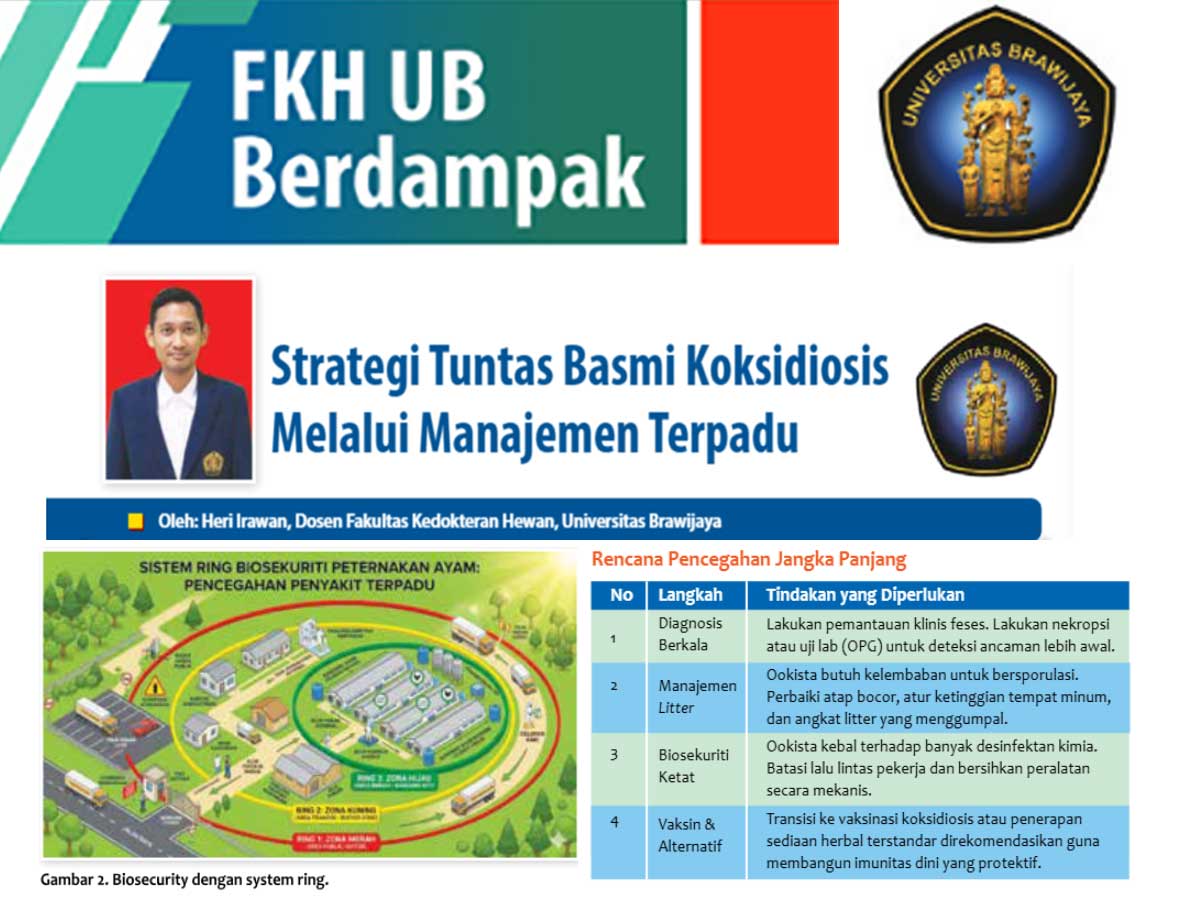
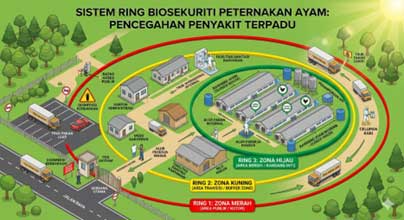
In addressing enteric diseases like coccidiosis, biosecurity must be recognized as the primary foundation of prevention. The 3-Zone Biosecurity Ring System creates layered protection:
-
Red Zone (dirty/public)
-
Yellow Zone (transition/buffer)
-
Green Zone (clean/core housing area)
Its effectiveness relies on strict transition protocols, including vehicle disinfection, UV sterilization for equipment, mandatory showering, changing into dedicated clothing, and using foot dips before entering the clean zone. This disciplined system is key to breaking the transmission cycle of coccidial oocysts.
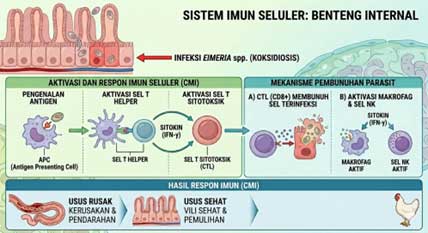
While biosecurity serves as the external defense, the internal defense lies in the chicken’s cellular immune system. Immune cells such as T cells and macrophages specifically target and destroy intestinal cells infected by Eimeria, interrupting the parasite’s life cycle. A strong immune system depends heavily on nutrition—especially protein, which provides essential amino acids for immune cell formation.
The combination of strict external biosecurity (Ring System) and high-quality nutritional intake forms a dual protection strategy to produce coccidiosis-resistant poultry.
Conclusion
Coccidiosis control can no longer be approached partially. This disease directly reflects the quality of farm sanitation. Any treatment or vaccination program will fail if farm management is neglected. Therefore, integrating external defense through biosecurity systems and internal defense through proper nutrition is the most effective strategy to protect poultry assets in the modern farming era.