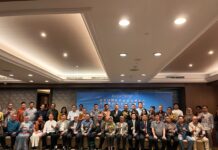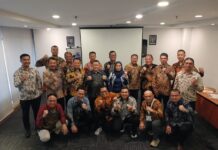




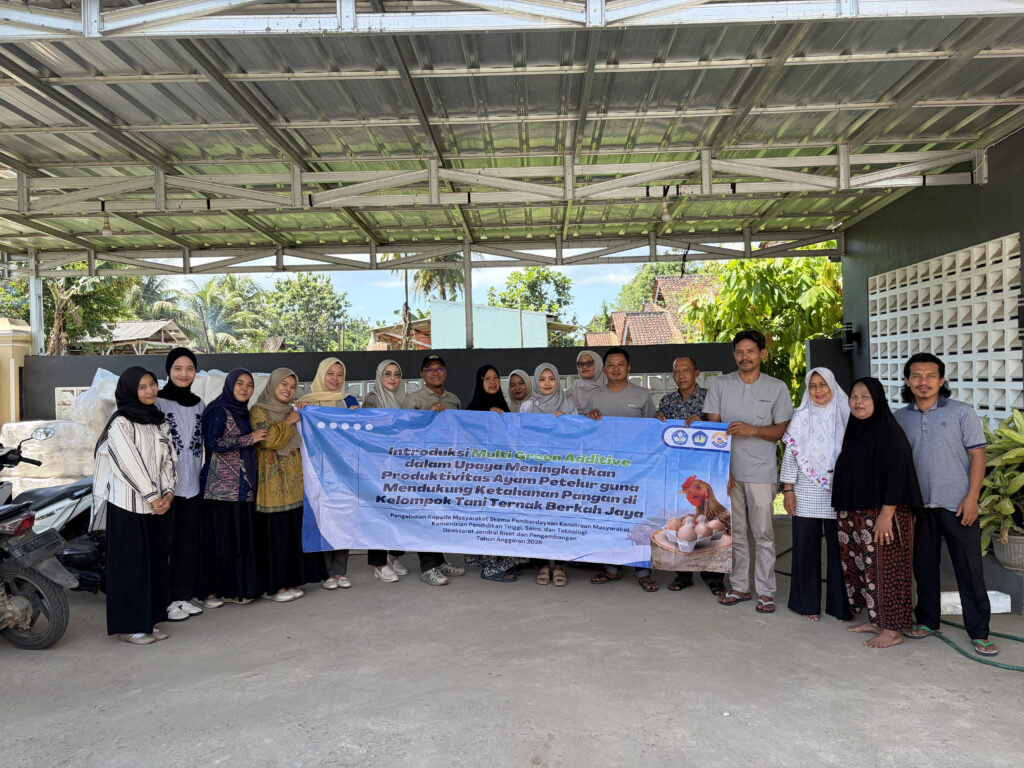
POULTRYINDONESIA, Lampung – The use of herbal products as an alternative feed additive continues to be developed to support both productivity and egg quality. Through a community service program, a team of lecturers from the University of Lampung (Unila) introduced the use of herbal products to farmers at the Berkah Jaya Livestock Farmers Group in Gading Rejo District, Pringsewu Regency, Lampung, on Thursday (October 1).
The activity was conducted in response to the growing need within the poultry industry for alternative feed additives, particularly following the ban on antibiotic growth promoters (AGPs) in 2017. One alternative that has been widely developed is herbal phytobiotics, which are used to support poultry health and performance.
The program, titled “Introduction of Multi Green Additive to Improve Layer Productivity in Support of Food Security at the Berkah Jaya Livestock Farmers Group,” was led by Etha ‘Azizah Hasiib, S.Pt., M.Sc., a lecturer in the Animal Feed Nutrition and Technology Study Program, Faculty of Agriculture, University of Lampung. The activity also involved drh. Ririn Angriani, M.Si., and Sekar Tiara Syafani, S.P., M.Si., from the Agricultural Extension Study Program.
The activity was part of a Community Service Program funded by the Directorate of Research and Community Service, Directorate General of Research and Development, Ministry of Higher Education, Science, and Technology in 2026 through the Community Partnership Empowerment scheme, under contract number 234/C3/DT.05.00/PL-BARU/2026.
During the program, the community service team presented three main topics considered relevant to farmers’ needs: the use of herbal products in laying hens, feeding strategies to help cope with stress, and egg product branding.
The herbal products topic was presented by Etha ‘Azizah Hasiib. In her presentation, she explained the development of herbal egg products and their application in laying hens. The use of herbal products is aimed not only at supporting poultry health and productivity, but also at producing eggs with characteristics that can provide added value to consumers.
“One aspect that consumers pay attention to when purchasing eggs is the color of the egg yolk. Through the use of herbal products, farmers can produce a more attractive yolk color, which can become one of the product’s selling points in the market,” she said.
Meanwhile, drh. Ririn Angriani, M.Si., presented material on strategies for managing heat stress through the application of betaine in feed. Hot environmental conditions can place stress on poultry and ultimately affect production performance. Therefore, feed management is an important component in maintaining the productivity of laying hens.
The egg product branding material was presented by Sekar Tiara Syafani, S.P., M.Si. The session emphasized the importance of product innovation and marketing amid changing consumer behavior in the digital era. According to the team, improving product quality needs to go hand in hand with farmers’ ability to establish their product identity and value proposition.
The farmers showed considerable enthusiasm throughout the activity. Group members not only followed the presentations but also actively discussed the types of herbal products that could be used, their application methods, and the potential economic value that could be generated through the development of herbal eggs.
Tri Nurjanah, Chairwoman of the Berkah Jaya Livestock Farmers Group, welcomed the program. She expressed hope that the innovations introduced could be implemented sustainably by group members.
“I hope the branding of these egg products can become a new icon for our livestock group in producing herbal eggs and, of course, increase our income amid fluctuating egg prices,” Tri explained.
The community service program did not stop at training and outreach. The lecturer team also conducted direct herbal applications at the farmers’ poultry houses using 180 laying hens from July to August 2026.
Several ingredients used included paprika extract, turmeric extract, paprika powder, and turmeric powder. Each was administered at different dosages and combined with algae as part of an effort to optimize the quality of the eggs produced.
The application results were presented at the end of the program on October 1, 2026. Based on the test results, egg quality improved, particularly in terms of yolk color. The yolk color score reached 13.44 based on the Yolk Color Fan, with the best result obtained from the treatment using paprika extract.
In addition to the physical characteristics of the eggs, testing was also conducted to assess product safety. Testing at the Lampung Veterinary Center showed that the eggs produced by the partner farmers were free from antibiotic residues, Salmonella, and E. coli.
Further testing was conducted to analyze the cholesterol profile. The results showed an egg cholesterol content of 260 mg/100 g. This figure was lower than the 411 mg/100 g value listed as the USDA egg comparison standard in the program materials.
These results provided one of the foundations for the team to assess the potential development of herbal eggs as a value-added product. For farmers, the innovation is not only related to improving product quality but also opens opportunities to establish product differentiation in an increasingly competitive egg market.
Tri Nurjanah said the results of the program had given her livestock group renewed enthusiasm. Amid fluctuating egg prices and rising feed costs, developing a product with distinctive characteristics could serve as an alternative way to increase the economic value of the business.
“The results of this community service program have become a new source of motivation for our livestock group amid continuously rising feed prices and fluctuating egg prices. Developing these eggs will become a new business opportunity that can increase our income,” she said.
**Get more information about Indonesia’s poultry industry by joining the Satwa Media Group WhatsApp Channel.