



Poultry nutrition should no longer be viewed merely as meeting basic requirements; instead, it must be seen as a crucial strategy determining the success of poultry production.
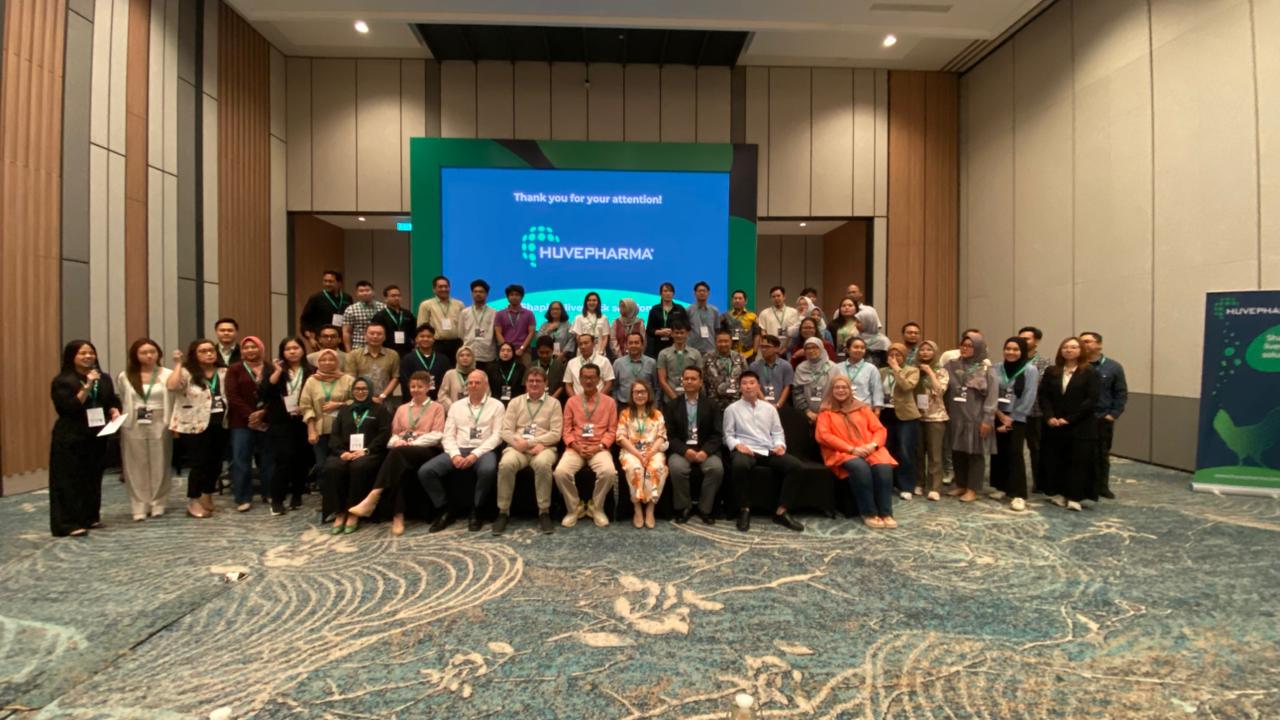
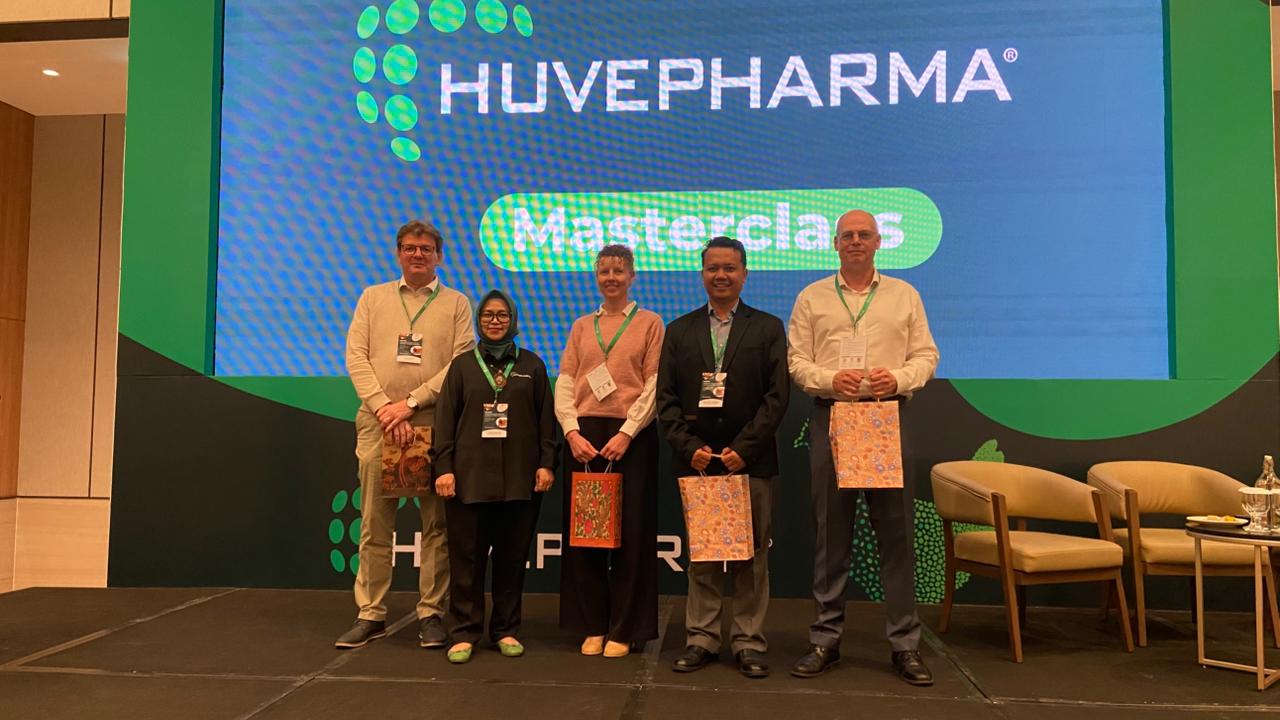
Amidst the rapidly evolving dynamics of the poultry industry, Huvepharma hosted a masterclass titled “Shaping the Future of Poultry Nutrition in Modern Production” on Tuesday (April 5, 2026) at the DoubleTree by Hilton Jakarta Bintaro Jaya, South Tangerang. The event featured a lineup of international experts who shared the latest insights on poultry nutrition strategies in the modern production era.
 This masterclass was designed as a knowledge-sharing platform for poultry industry professionals, ranging from nutritionists and field technical managers to decision-makers in feedmill companies and commercial farms.
The topics raised were highly relevant to current industry challenges, covering feed formulation efficiency, poultry gut health optimization, enzyme utilization in rations, and global health issues related to antimicrobial resistance. The seminar was highly interactive, seamlessly guided by Bayu Sesarahardian, Feed Technology Senior Manager at PT Sinta Prima Feedmill, who served as the moderator throughout the event.
In her opening remarks, Country Manager of Huvepharma Indonesia, Yatie Setiarsih, introduced the company profile while reinforcing Huvepharma’s business strategic direction in the Indonesian market. She stated that Huvepharma is currently focusing its entire business line on the animal health and nutrition sector, with a full concentration on livestock, and has not yet ventured into the pet animal segment.
“At 25 years old, our company is relatively young compared to the long-established players in this industry. Nevertheless, Huvepharma has grown into a well-recognized global player in animal health and nutrition,” Yatie expressed.
In addition to sharing the company’s track record, Yatie also introduced Huvepharma’s digital innovation, namely the AviApp application. This platform is designed to assist poultry industry stakeholders in monitoring livestock performance in real-time and making management decisions that are quick, precise, and data-driven.
“We have entered an era where digital transformation is increasingly penetrating all sectors, including poultry. The presence of AviApp reflects Huvepharma’s commitment—we do not just provide products, but we also deliver technology-based solutions for our business partners.”
The Shift to Precision Formulation
The first session was delivered by Rik Pieterse from Dutch Feed Consultancy, a poultry nutrition consultant with an extensive track record in Europe and various Asian markets. In his presentation, Rik pointed out that conventional methods in feed formulation are no longer adequate to meet the demands of an increasingly modern poultry industry.
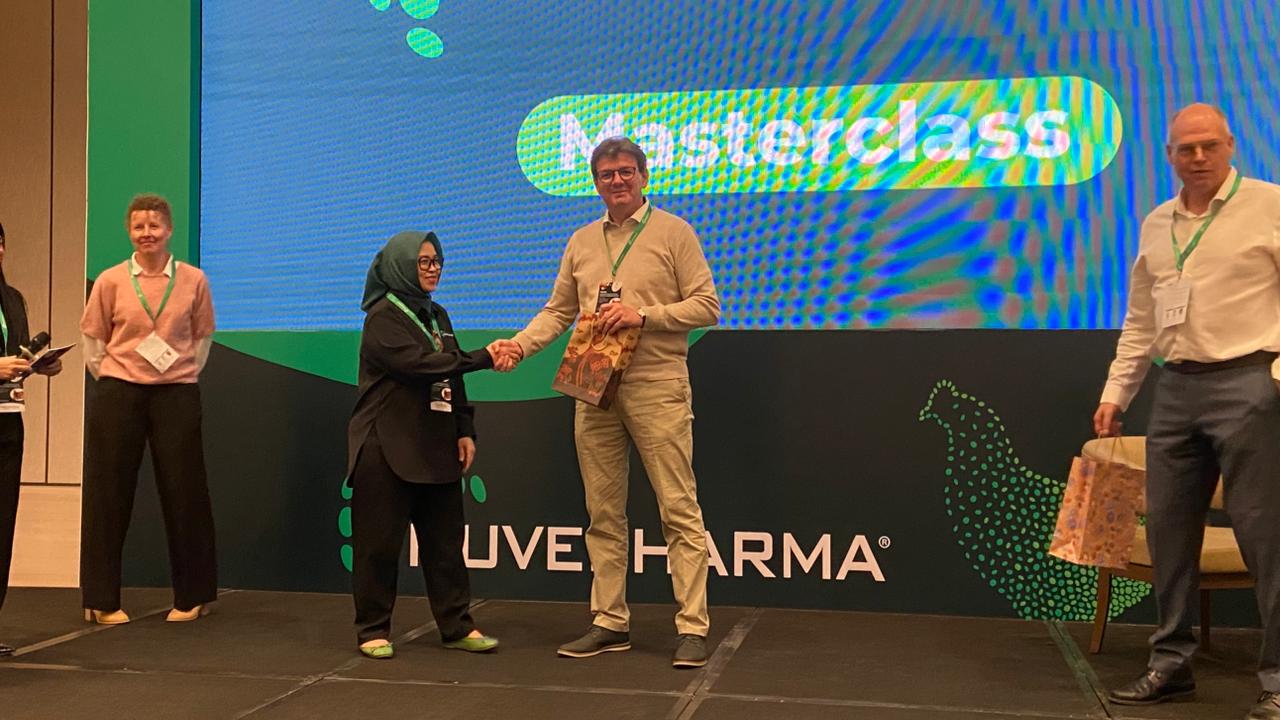 “For a long time, conventional feed formulation has only focused on meeting minimum nutrient requirements. While this understanding has been implemented for years, it is time for us to move further. We must begin to consider nutrient interactions, metabolic efficiency, and, of course, the economic impact of every formulation decision,” Rik emphasized.
He stressed that modern feed formulation must be able to optimize poultry performance holistically—not just meeting minimum standards, but also without sacrificing production cost efficiency. Therefore, Rik introduced the concept of low protein diets as a strategy that is increasingly being adopted in various developed nations.
“In several countries, the low-protein diet concept has proven to deliver numerous advantages, such as suppressing feed costs which are becoming more expensive by the day—especially for protein source raw materials like imported soybean meal. It also reduces nitrogen excretion into the environment, making this diet align with the principles of more eco-friendly and sustainable livestock production.”
However, Rik reminded the audience that implementing low protein diets is not as simple as merely reducing crude protein levels in the ration. This strategy requires highly precise formulation, specifically regarding the supplementation of essential amino acids such as lysine, methionine, threonine, and tryptophan.
“Without proper formulation and amino acid supplementation, lowering protein levels can actually have a negative impact on growth performance, feed conversion, and even overall flock health. Thus, a low protein diet is not just about protein reduction; it is the art of balancing nutrients at a much more precise level,” he explained.
Maximizing Enzyme Efficiency
Next, Lode Nollet, Global Product Manager for Poultry Enzymes at Huvepharma, discussed the role of enzymes in improving poultry nutritional efficiency. The main focus of his presentation was the phytase enzyme and how it can serve as a solution amidst rising prices for mineral raw materials.
Lode opened his session by presenting the fact that most of the phosphorus contained in primary feed ingredients like corn and soybean meal is in the form of phytate (phytic acid), which naturally cannot be digested by the poultry digestive system.
“Poultry lack sufficient endogenous enzymes to break down phytate bonds. This means that phosphorus in the form of phytate is simply wasted through feces, without contributing anything to the animal’s nutrition,” Lode explained.
Under these conditions, farmers are forced to add inorganic phosphorus sources such as Dicalcium Phosphate (DCP) or Monocalcium Phosphate (MCP) into the ration to meet the poultry’s phosphorus requirements. Yet, the prices of both raw materials continue to surge in line with global market fluctuations, adding to the already heavy production cost burden.
This is where the phytase enzyme serves as a solution. By adding phytase to the ration, phytate bonds can be enzymatically broken down, making phosphorus available and absorbable for the poultry. This creates a double benefit: the need for inorganic phosphorus supplementation is significantly reduced, and feed costs can be curbed.
However, Lode reminded that the effectiveness of phytase does not stand alone. There is another crucial factor that is often overlooked—the mineral balance in the ration, specifically the calcium-to-phosphorus (Ca:P) ratio.
“Excessive calcium in the ration can directly inhibit phytase enzyme activity. So, it is not just a matter of adding phytase to the feed; we must also ensure that calcium levels and the Ca:P ratio are within the optimal range so that phytase can work at its maximum capacity,” he asserted.
Addressing the AMR Threat
Closing the masterclass session series, Veerle Hautekiet, Global Marketing Director at Huvepharma, raised the issue of Antimicrobial Resistance (AMR). This topic is vital to discuss given its close link to global public health.
“In 2020, it was estimated that around 1.3 million human deaths worldwide were directly attributed to bacterial infections resistant to antibiotics. More worryingly, scientists’ projections show that this figure could drastically spike to 10 million deaths per year by 2050, making AMR one of the biggest health threats of this century, even surpassing the death burden caused by cancer.”
One of the factors suspected of contributing to the spread of AMR is the inappropriate use of antibiotics in the livestock sector, both for treatment and as growth promoters. Antibiotic residues entering the food chain and the environment put pressure on bacteria to evolve into resistant strains.
“Poultry farming must not focus solely on productivity. We must have full awareness that at the end of this production chain are humans as the final consumers. Their health is our shared responsibility,” Veerle stated.
Indonesia itself has banned the use of Antibiotic Growth Promoters (AGP) in poultry production since 2018, following the footsteps of European countries that implemented similar bans earlier. This condition forces the industry to adapt and find alternatives that are both effective and safe.
“Huvepharma is here to support the transition of the Indonesian poultry industry toward AGP-free poultry production. We provide everything from organic acids, probiotics, and prebiotics, to immunomodulator products that help maintain gut health and livestock performance without relying on antibiotics.”
By bringing in international experts and fostering open discussions with field practitioners, Huvepharma is not only positioning itself as a product supplier, but as a dedicated partner to the Indonesian poultry industry in navigating a new, increasingly complex, and challenging production era. [ADV]
TESTIMONIALS
“The material presented was highly insightful. We were taught from the basics regarding substances that I believe are very critical to chicken growth. It turns out that to achieve optimal growth performance, we must pay attention to various aspects—not just the protein content, but also micronutrients like calcium and phosphorus, because meeting the chicken’s nutritional needs must be balanced.”
 — Carlos, PT Unggul Indah Jaya
“The material was excellent as it opened our horizons so that we don’t just blindly choose feed or feed additives for chickens. We now understand how to measure the effectiveness and efficiency of the feed used. It turns out that if we understand proper nutrition, we can also achieve cost efficiency without sacrificing the livestock’s nutritional requirements. Very useful and applicable.”
 — Megan, PT Buana Intan Sejati
“The theme raised was very fresh and the speakers were highly up-to-date. I am pleased to get the latest knowledge regarding the poultry world, especially developments from Europe. As formulators, we need the latest information on global feed developments, which of course must still be adapted to conditions in Indonesia. Thank you for the invitation, I hope more events like this will be held.”
— Windu, PT Sido Agung Agro Prima