Bagaimana cara mendapatkan dan berlangganan majalah Poultry Indonesia?
Bagaimana cara membayar pesanan majalah Poultry Indonesia?
Apa itu Advertorial?
Bagaimana cara memasang iklan di website Poultry Indonesia?
Dari mana referensi informasi dalam majalah poultry indonesia?
Dengan siapa saya bisa bertanya seputar kesehatan, penyakit terkait unggas?
Apa itu Poultry Events?
Dengan siapa saya bisa ingin mengajukan kerjasama media partner atau mengadakan suatu kegiatan?
Apa itu Poultry Indonesia?
Poultry Indonesia merupakan majalah yang didirikan pada tahun 1979 di Jakarta, dan menjadi majalah pertama dan tertua di Indonesia yang memiliki ulasan khusus mengenai perunggasan.
Referensi informasi yang tersaji dalam majalah Poultry Indonesia tidak hanya tercakup dalam negeri saja, Poultry Indonesia telah menjalin kerjasama dengan berbagai pihak luar negeri untuk menyajikan informasi terkait perkembangan perunggasan di luar Indonesia.
Poultry Indonesia terdiri dari sekelompok orang yang memiliki dedikasi dan apresiasi tinggi terhadap pekerjaan mereka, dengan senantiasa selalu menyajikan sebuah majalah yang layak dibaca oleh masyarakat perunggasan.
Kapan Majalah Poultry terbit?
Majalah Poultry Indonesia terbit per bulan pada minggu ke-2 dan memiliki dua belas edisi setiap tahun.
Bagaimana cara mendapatkan dan berlangganan majalah Poultry Indonesia?
Majalah Poultry Indonesia tersedia di Toko Buku Gramedia namun dengan kuantiti terbatas. Anda bisa juga langsung membeli dengan menghubungi Poultry Indonesia melalui:
Advertorial adalah artikel yang dimuat di media massa dengan cara membayar yang bertujuan untuk promosi.
Selain itu juga advertorial bisa diartikan sebagai iklan yang disusun atau dibuat sedemikian rupa
sehingga seperti sebuah artikel yang dikarang oleh media cetak yang bersangkutan.
Bagaimana cara memasang iklan di website Poultry Indonesia?
Untuk dapat memasang iklan pada Website Poultry Indonesia dapat menghubungi Divisi Iklan melalui Email:
Darimana referensi informasi dalam majalah poultry indonesia?
Referensi informasi yang tersaji dalam majalah Poultry Indonesia tidak hanya tercakup dalam negeri saja, Poultry Indonesia telah menjalin
kerjasama dengan berbagai pihak luar negeri untuk menyajikan informasi terkait perkembangan perunggasan di luar Indonesia.
Koresponden Luar Negri:
Elis Helinna (New York, Amerika Serikat)
Koresponden Dalam Negeri:
Boy Gunawan Agustino (Tegal),
Muhrishol Yafi (Sidoarjo),
Mahardika Agil Bimasono (Yogyakarta), Sri Maulidini (Purwokerto),
Tri Okto Sareji Adytia (Poso).
Dengan siapa saya bisa bertanya seputar kesehatan, penyakit terkait unggas?
Chronic digestive disorders are often a silent problem that gradually undermines poultry performance without obvious clinical signs. Maintaining a balanced gut microbiota is a fundamental pillar of productivity in Indonesia’s poultry industry.
Digestive disorders in chickens are often regarded as routine issues. Birds continue to eat, remain active, and mortality rates are not always elevated. However, in the field, chronic digestive disorders frequently become a silent problem: feed conversion ratio (FCR) deteriorates, body weight uniformity declines, litter becomes wet more quickly, feces appear abnormal, and egg production decreases. In modern poultry operations where efficiency is critical, gut health is a key determinant of productivity.
What Is Dysbacteriosis?
Dysbacteriosis, or dysbiosis, is a condition in which the balance of the intestinal microbiota is disrupted. Under normal circumstances, the chicken gut is inhabited by a community of microorganisms that aid digestion, produce beneficial metabolites, maintain intestinal integrity, and support immune function. When this microbial composition shifts toward an imbalanced state, nutrient absorption becomes impaired. Unabsorbed nutrients then serve as substrates for harmful microorganisms, further exacerbating the disorder (Kogut et al., 2023).
Subclinical Signs and Predisposing Factors
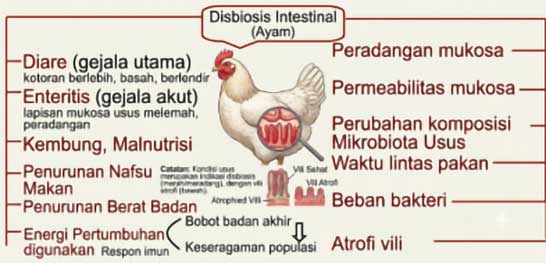
In broiler houses, dysbacteriosis often occurs in a subclinical form. Birds may not appear seriously ill, yet their performance falls short of production targets. Common signs include watery feces, inconsistent fecal coloration, rapidly wet litter, dull feathers, and visible undigested feed particles in the droppings.
Numerous factors can trigger dysbacteriosis, including poor feed ingredient quality, mycotoxin contamination, inadequate water quality, stress, high stocking density, and Eimeria infections.
If left unmanaged, this condition can pave the way for necrotic enteritis. This disease, commonly associated with Clostridium perfringens, rarely develops in isolation. Intestinal mucosal damage caused by coccidiosis, dietary changes, and stress creates favorable conditions for excessive bacterial proliferation (Emami et al., 2022).
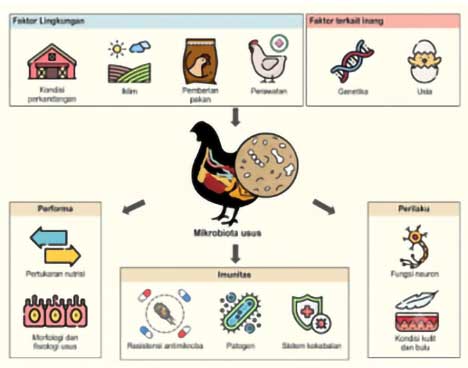
Figure 1. Environmental and host-related factors influencing gut microbiota and chicken health (Cheng et al., 2025).
Early Signs of Gut Microbiota Imbalance
Watery feces or inconsistent fecal coloration
Litter becoming wet quickly and producing a strong odor
Presence of undigested feed particles in feces
Poor growth uniformity
Increased FCR without an obvious cause
Reduced activity, dull plumage, and decreased feed intake
Recurrent history of coccidiosis or necrotic enteritis
Figure 2. Clinical signs observed in chickens affected by intestinal dysbiosis (Salahi et al., 2025).
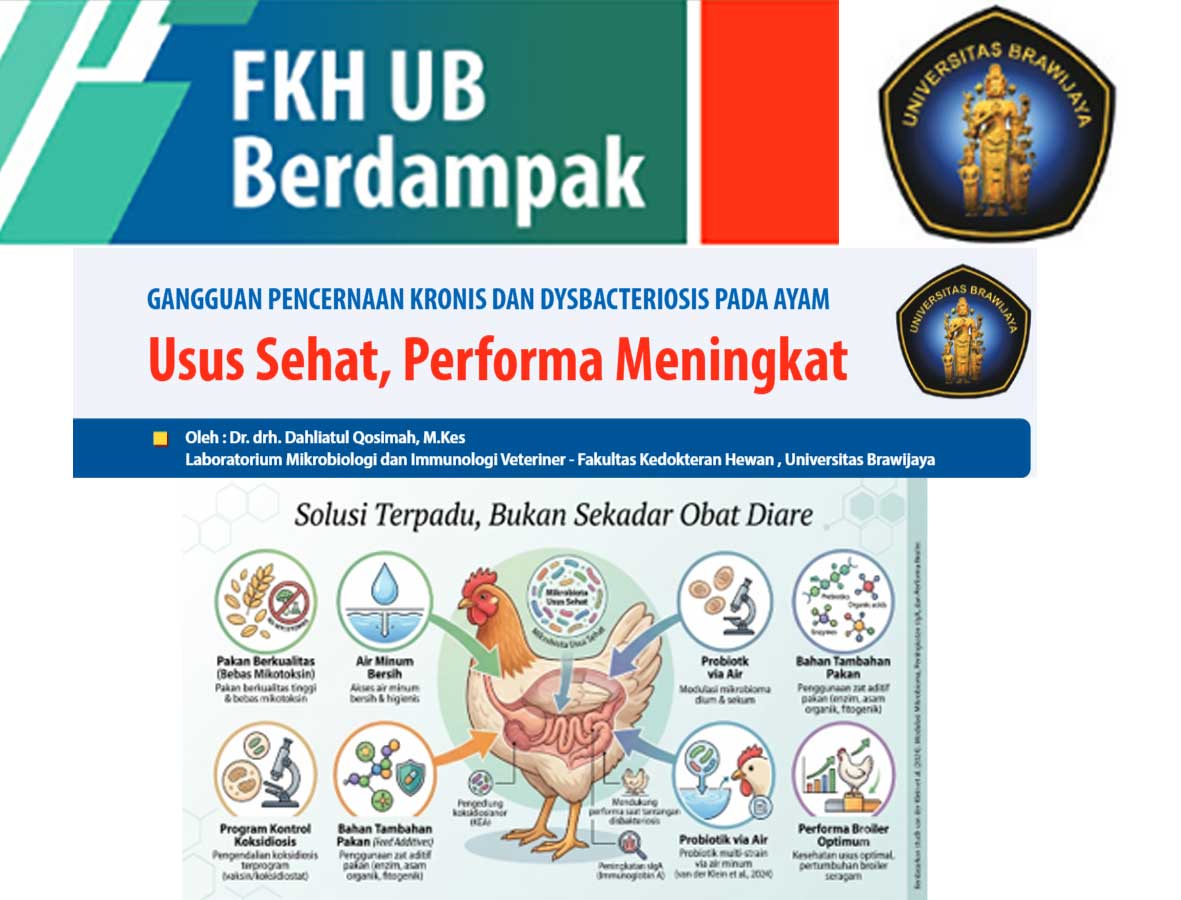
An Integrated Solution, Not Just Anti-Diarrheal Treatment
Maintaining gut health requires more than simply treating diarrhea. Feed quality must remain consistent and free from mycotoxins, drinking water quality should be carefully managed, and coccidiosis must be controlled through an appropriate prevention program. In addition, feed additives should be used rationally, including probiotics, prebiotics, enzymes, organic acids, and phytogenic compounds.
A study by van der Klein et al. (2024) demonstrated that administering a dual-strain probiotic through drinking water was able to modulate the ileal and cecal microbiome, enhance secretory immunoglobulin A (sIgA) levels, and support broiler performance under dysbacteriosis challenge conditions.