Bagaimana cara mendapatkan dan berlangganan majalah Poultry Indonesia?
Bagaimana cara membayar pesanan majalah Poultry Indonesia?
Apa itu Advertorial?
Bagaimana cara memasang iklan di website Poultry Indonesia?
Dari mana referensi informasi dalam majalah poultry indonesia?
Dengan siapa saya bisa bertanya seputar kesehatan, penyakit terkait unggas?
Apa itu Poultry Events?
Dengan siapa saya bisa ingin mengajukan kerjasama media partner atau mengadakan suatu kegiatan?
Apa itu Poultry Indonesia?
Poultry Indonesia merupakan majalah yang didirikan pada tahun 1979 di Jakarta, dan menjadi majalah pertama dan tertua di Indonesia yang memiliki ulasan khusus mengenai perunggasan.
Referensi informasi yang tersaji dalam majalah Poultry Indonesia tidak hanya tercakup dalam negeri saja, Poultry Indonesia telah menjalin kerjasama dengan berbagai pihak luar negeri untuk menyajikan informasi terkait perkembangan perunggasan di luar Indonesia.
Poultry Indonesia terdiri dari sekelompok orang yang memiliki dedikasi dan apresiasi tinggi terhadap pekerjaan mereka, dengan senantiasa selalu menyajikan sebuah majalah yang layak dibaca oleh masyarakat perunggasan.
Kapan Majalah Poultry terbit?
Majalah Poultry Indonesia terbit per bulan pada minggu ke-2 dan memiliki dua belas edisi setiap tahun.
Bagaimana cara mendapatkan dan berlangganan majalah Poultry Indonesia?
Majalah Poultry Indonesia tersedia di Toko Buku Gramedia namun dengan kuantiti terbatas. Anda bisa juga langsung membeli dengan menghubungi Poultry Indonesia melalui:
Advertorial adalah artikel yang dimuat di media massa dengan cara membayar yang bertujuan untuk promosi.
Selain itu juga advertorial bisa diartikan sebagai iklan yang disusun atau dibuat sedemikian rupa
sehingga seperti sebuah artikel yang dikarang oleh media cetak yang bersangkutan.
Bagaimana cara memasang iklan di website Poultry Indonesia?
Untuk dapat memasang iklan pada Website Poultry Indonesia dapat menghubungi Divisi Iklan melalui Email:
Darimana referensi informasi dalam majalah poultry indonesia?
Referensi informasi yang tersaji dalam majalah Poultry Indonesia tidak hanya tercakup dalam negeri saja, Poultry Indonesia telah menjalin
kerjasama dengan berbagai pihak luar negeri untuk menyajikan informasi terkait perkembangan perunggasan di luar Indonesia.
Koresponden Luar Negri:
Elis Helinna (New York, Amerika Serikat)
Koresponden Dalam Negeri:
Boy Gunawan Agustino (Tegal),
Muhrishol Yafi (Sidoarjo),
Mahardika Agil Bimasono (Yogyakarta), Sri Maulidini (Purwokerto),
Tri Okto Sareji Adytia (Poso).
Dengan siapa saya bisa bertanya seputar kesehatan, penyakit terkait unggas?
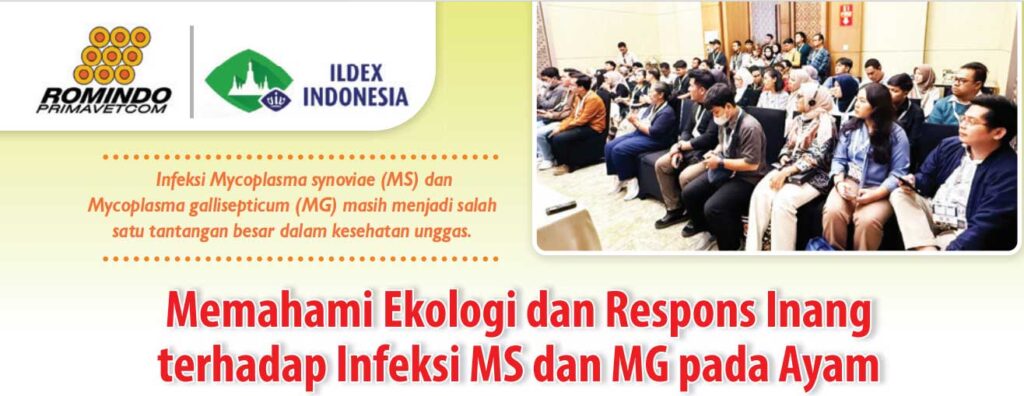
Infections caused by Mycoplasma synoviae (MS) and Mycoplasma gallisepticum (MG) remain a major challenge in poultry health.
Beyond their association with respiratory disorders and impaired chicken performance, the complex characteristics of Mycoplasma mean that effective control requires a deeper understanding of the interactions between pathogens, hosts, vaccination, and the environment.
These issues were the focus of a seminar entitled “Ecology and Host Response of MS and MG Infections in Chickens,” held at Cendana Room 2, ICE BSD, on September 17, 2026, as part of ILDEX Indonesia 2026. The seminar featured Prof. Dr. Chris Morrow, PhD, BDSc, Senior Technical Advisor at Bioproperties, as the main speaker.
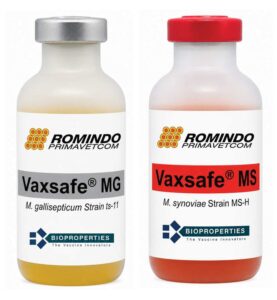
Drh. Mulia Trisutandi, Business Manager for Poultry Vaccines at PT Romindo Primavetcom, encouraged participants to raise awareness of Mycoplasma synoviae and the importance of implementing appropriate control measures. “We must control Mycoplasma synoviae properly and use effective solutions,” Mulia said.
Mycoplasma Is Not an Ordinary Bacterial Infection
With approximately 40 years of experience in poultry health, Prof. Chris Morrow has conducted extensive research on Mycoplasma. He began researching Mycoplasma synoviae in Australia in 1991 and developed an MS vaccine in 1998. This experience provided the foundation for his presentation on the unique characteristics of MS and MG.
According to Prof. Chris Morrow, one of the characteristics that distinguishes Mycoplasma is its infection pattern. Mycoplasma can be transmitted both horizontally and vertically, and infections can persist throughout a chicken’s lifetime. Unlike many bacterial infections that are temporary, Mycoplasma infections can become active and chronic.
“Mycoplasma is very unusual compared with other bacteria. It can be transmitted horizontally and vertically. Once it enters a bird, it can remain in the body and develop into an active, chronic infection,” Chris explained.
Another characteristic is Mycoplasma’s ability to adapt to immune responses. Changes in surface proteins enable the organism to evade or reduce the effectiveness of the immune response that has developed.
“When we try to control Mycoplasma, we are essentially chasing a moving target because Mycoplasma can change its surface proteins to evade the immune response,” he said.
This demonstrates that understanding Mycoplasma requires more than simply examining antibody responses. The interaction between the pathogen and the immune system is far more complex and must be understood comprehensively.
Maintaining Respiratory Tract Defenses
MS and MG are closely associated with the chicken respiratory system, particularly the cilia lining the respiratory tract. Damage to this natural defense system can worsen respiratory conditions, especially when chickens are exposed to additional predisposing factors such as poor air quality, high ammonia levels, or other respiratory infections.
Prof. Chris Morrow explained that MS and MG can interact with cilia at different sites. Understanding these infection mechanisms is therefore important when determining appropriate control strategies.
“MG and MS interact with the respiratory system and its cilia. When this system is disrupted, the natural defenses of the chicken respiratory tract can also be compromised,” Chris said.
This also explains why Mycoplasma infections can become more complicated when accompanied by other disease factors or stressors.
Immune Responses Are Key
He further explained that successful protection against Mycoplasma cannot be assessed solely by measuring antibody levels. Mucosal immune responses in the trachea play an important role, including the involvement of T-cell and B-cell immune systems. Live vaccines can help stimulate these responses, but their development takes time and can be influenced by the health status of the chickens.
“In Mycoplasma infections, antibody responses are not always the most relevant indicator of protection. We consider tracheal mucosal immunity to be one of the important features of vaccine-induced protection,” he explained.
He also noted that immunosuppressive conditions, including those associated with chicken anemia and infectious bursal disease (IBD), can affect chickens’ ability to respond to vaccination. Therefore, vaccination success must be viewed as part of an overall flock health program.
In addition to vaccination, antibiotic use was another important topic discussed during the seminar. Prof. Chris Morrow emphasized that antibiotic use around the vaccination period must be carefully considered, particularly when live vaccines are used.
Immune responses need time to develop. Consequently, using antimycoplasmal antibiotics too close to the vaccination period may interfere with the intended effects of live vaccines.
The discussion then turned to an increasingly important issue in the poultry industry: antimicrobial resistance. He presented examples of Mycoplasma isolates from various regions that had demonstrated resistance to several classes of antibiotics.
“The more antibiotics we use, the more resistance we see developing. Therefore, we need to take a different approach to controlling Mycoplasma,” he added.
Antibiotic resistance does not occur solely through changes in antibiotic targets. Other mechanisms, such as efflux and biofilm formation, may also contribute to an organism’s ability to survive antimicrobial exposure. Therefore, a more integrated control approach is essential, combining vaccination, biosecurity, environmental management, flock health monitoring, and the prudent use of antibiotics.
The seminar provided an opportunity for poultry industry stakeholders to examine MS and MG from a broader perspective. Controlling Mycoplasma is not simply about treating chickens showing clinical signs, but also about understanding infection ecology, host responses, vaccine effectiveness, immune status, and antimicrobial use.