



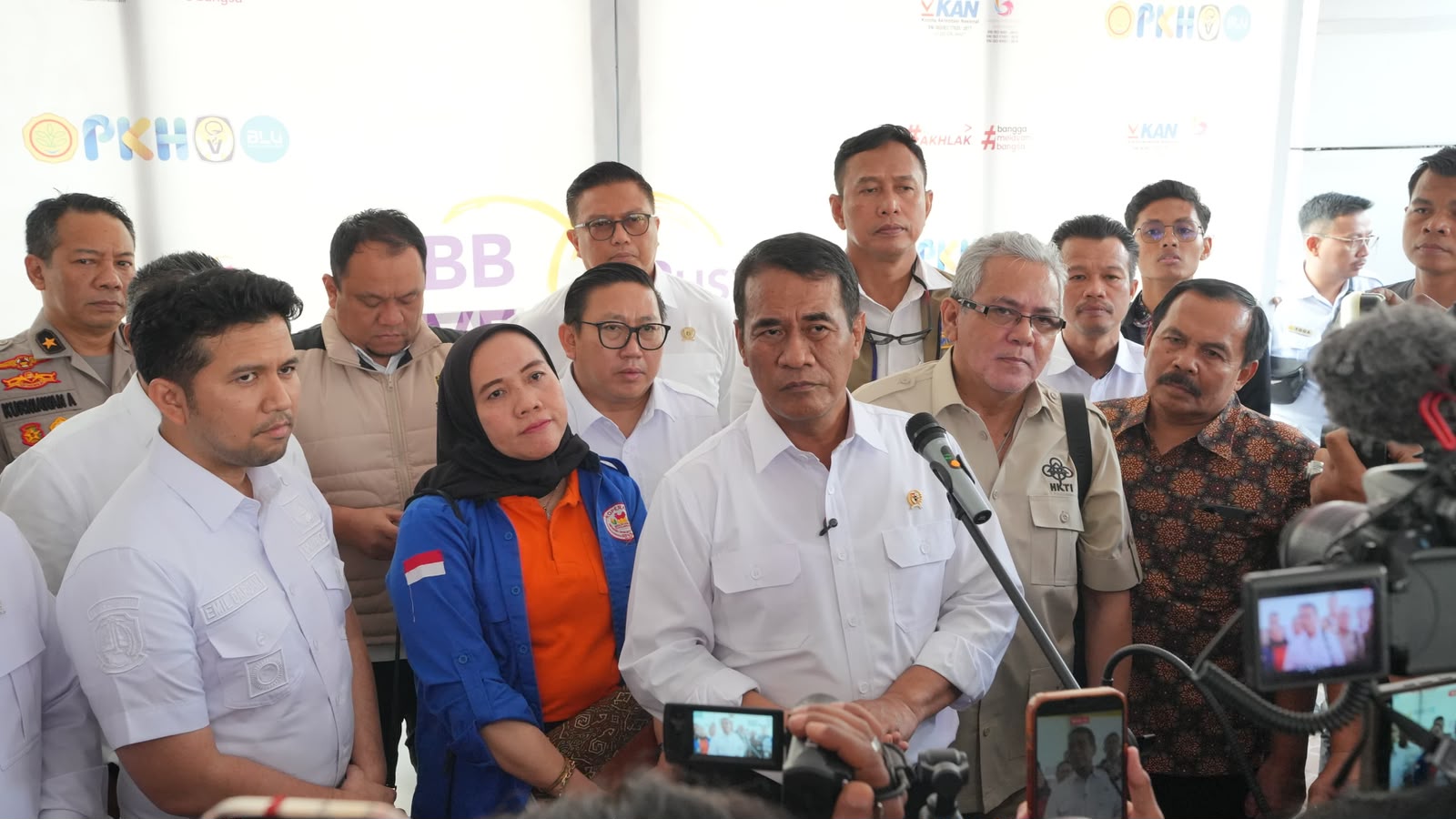
POULTRYINDONESIA, Surabaya — Minister of Agriculture Andi Amran Sulaiman has taken several measures to address the pressures faced by smallholder poultry farmers. During a Poultry Coordination Meeting in Surabaya, East Java, on Tuesday (11/8/2026), Amran confirmed that the feed price control policy would continue through the end of the year while requiring Nutrition Fulfillment Service Units (SPPGs) to procure eggs from farmers.
The decisions were made after Amran received concerns from farmers in various regions regarding production costs and difficulties marketing their livestock products. According to him, farmers’ problems must be addressed comprehensively, not only from the selling-price side but also from the production-cost side.
“We appreciate poultry farmers throughout Indonesia for being quite communicative in conveying their concerns. Until three in the morning, we were discussing the situation of our farmers. Alhamdulillah, today we reached an agreement. We will continue the feed price policy through the end of the year,” Amran said.
According to Amran, maintaining egg prices alone is not enough if feed costs continue to rise. Conversely, controlling production costs will also have limited impact if farmers’ products cannot be absorbed at reasonable prices.
Therefore, the government is taking measures on both sides. Feed prices will be kept under control so that farmers’ production costs remain manageable, while egg procurement will be strengthened through SPPGs.
“We will maintain the government purchase price (HPP) for eggs, but we must also keep feed prices under control and prevent them from becoming too high. We must not take advantage of people’s difficulties. We have all agreed on this,” Amran stressed.
SPPGs Required to Procure Eggs
On the downstream side, Amran confirmed that SPPGs are required to procure eggs in accordance with the applicable regulations and technical guidelines. The measure is expected to provide market certainty for eggs produced by smallholder farmers while strengthening the livestock product supply chain within government programs.
“There are already instructions and an official letter requiring procurement in accordance with the technical guidelines. We are doing this for the sake of our farmers throughout Indonesia,” he said.
Amran also encouraged increased egg consumption through the Free Nutritious Meals (MBG) Program. According to him, the use of eggs in MBG menus could potentially be increased from once to two or even three times a week.
“God willing, we will maintain egg prices at the SPPG level. Then, if consumption once a week can be increased to twice or even three times, the procedure has already been established by BGN,” Amran said.
According to him, increasing egg consumption through MBG is not only related to meeting the public’s nutritional needs, but can also strengthen the market for smallholder farmers. With more certain procurement, farmers will have greater room to sustain their businesses.
Amran emphasized that protecting smallholder farmers is a serious government priority. This is particularly important given that around 3.8 million farmers depend on the sustainability of the poultry sector.
He even chose to respond directly to the issue in Surabaya after receiving information about the pressures and concerns faced by farmers in several regions.
“We have to protect these 3.8 million farmers. Do we want to let them protest every day? That is our responsibility. As soon as we saw demonstrations in several regions, we immediately held a meeting in Surabaya. We did not wait for another meeting in Jakarta,” he said.
According to Amran, the measure demonstrates the government’s presence in addressing farmers’ problems. When issues emerge in the field, the government must immediately sit down together, listen to farmers’ concerns, and make decisions that provide certainty.
“We must not take advantage of people’s difficulties,” he stressed.
Farmers Seek Longer-Term Certainty
Responding to the decision, Eti Marlina, Coordinator of Rumah Kebersamaan Blitar, Kediri, Tulungagung, Malang, and Trenggalek (BKT MT), welcomed the government’s move to maintain feed prices and availability.
According to Eti, certainty over feed prices is crucial for micro, small, and medium-scale farmers because feed is one of the largest components of production costs.
Her organization also proposed extending the duration of the feed policy to provide farmers with greater business certainty. For micro-scale farmers, the previous three-month period was proposed to be extended to six months. For small-scale farmers, the period would increase from two months to four months, while for medium-scale farmers, it would increase from one month to two months.
“Alhamdulillah, the Minister of Agriculture has responded to this,” Eti said.
She also appreciated the government’s commitment to maintaining feed prices without compromising quality. According to her, affordable feed must continue to meet the necessary standards so that farmers’ productivity can be maintained.
“We hope there will be a joint commitment not to increase feed prices, whether for concentrates or finished feed, while maintaining SNI-compliant quality,” she said.
Through the feed price control policy and strengthened egg procurement, the government hopes to ease the pressures faced by farmers. At the same time, the continuity of these policies will be important to provide farmers with certainty in running their businesses while ensuring that public protein needs through government programs can continue to be met.
Get more information about Indonesia’s poultry industry by joining our Poultry Indonesia WhatsApp Channel.