




Surplus production without a corresponding increase in consumption will only put downward pressure on farm-gate prices without improving the nutritional status of the population.
The commemoration of National Children’s Day on July 23 once again served as a reminder that children’s growth and development should be a shared priority. This year, the question feels particularly ironic when placed alongside data on Indonesia’s national poultry production. On the one hand, Indonesia’s chicken and egg production is relatively in surplus, with consumption continuing to increase year after year. On the other hand, cases of child malnutrition are still being found in various regions, including areas that are actually surrounded by chicken farms and markets selling eggs every day. If the supply of animal protein is actually sufficient, why has that protein still not reached the plates of children who need it?
Consumer Absorption Remains Suboptimal
Data from the Directorate General of Livestock and Animal Health of the Ministry of Agriculture shows that per-capita consumption of broiler chicken increased from 11.63 kilograms in 2022 to 14.01 kilograms in 2026. The figure was disclosed directly by Agung Suganda, Director General of Livestock and Animal Health, in a written interview on Thursday (11/6/2026).
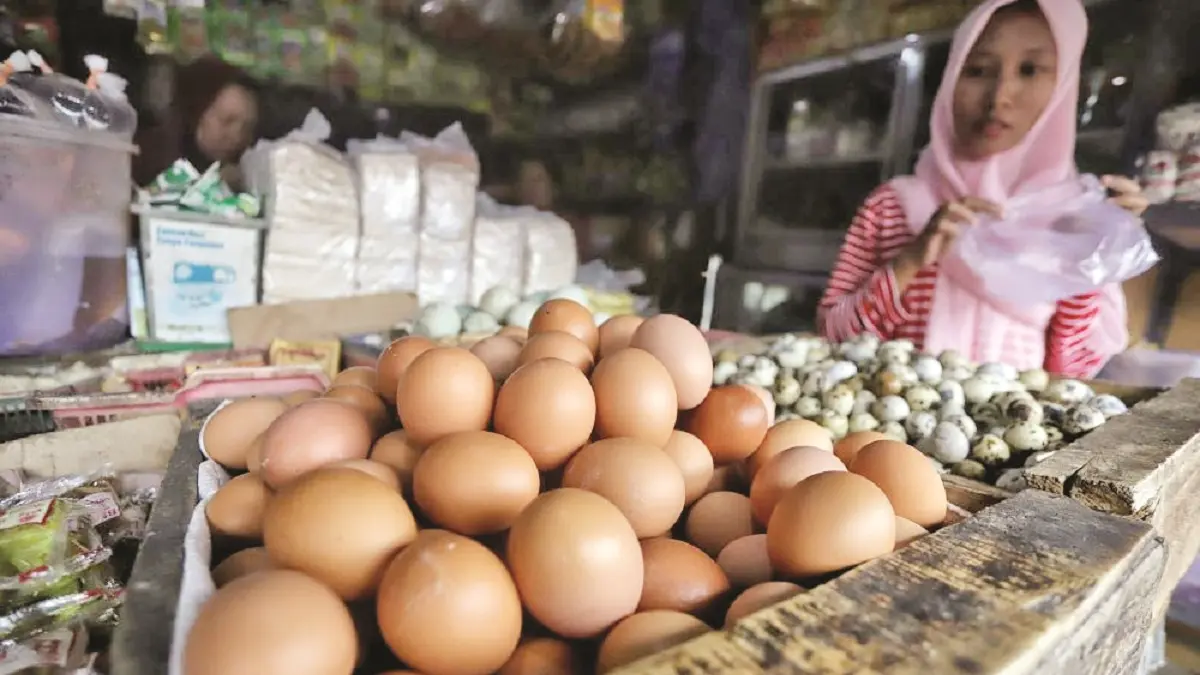 “Per-capita consumption of chicken eggs also increased from 20.02 kilograms to 22.53 kilograms per year over the same period. Nationally, poultry production is even relatively in surplus.”
However, this average increase is not necessarily reflected evenly across all regions. Data from the Indonesian Nutritional Status Survey shows that the national prevalence of stunting declined from 21.5 percent in 2023 to 19.8 percent in 2024. Although the figure has improved, several provinces, including East Nusa Tenggara, West Sulawesi, and Southwest Papua, still recorded prevalence rates above 30 percent. This figure only represents the surface of the problem, as the actual nutritional deficit lies in adequate animal protein intake.
Professor of the Faculty of Public Health at the University of Indonesia, Prof. Dr. drg. Sandra Fikawati, M.P.H., explained in a presentation in Surabaya on Tuesday (19/5/2026) that more than 80 percent of Indonesian children and adolescents are estimated to experience an animal protein deficit. Public consumption remains dominated by plant-based protein at 65.7 percent, while animal protein accounts for only 34.3 percent, with average animal protein consumption at around 21.29 grams per capita per day in 2020. A similar gap can be seen in milk consumption, which in Indonesia is only around 16.27 to 16.6 liters per capita per year, far below developed countries where consumption can exceed 200 liters per capita annually.
Three Faces of Malnutrition
According to Prof. Sandra, malnutrition among Indonesian children actually has three faces: macronutrient deficiencies such as stunting, wasting, and underweight; micronutrient deficiencies such as iron-deficiency anemia and deficiencies in vitamin A, iodine, and zinc; and overnutrition in the form of overweight and obesity.
 “Malnutrition occurs when a child’s body does not receive sufficient energy, protein, vitamins, and minerals to support optimal growth and development,” she said.
She added that stunting is not always synonymous with hunger. Stunting can also occur when children consume sufficient quantities of food but lack essential nutrients, particularly protein and micronutrients.
“Animal protein has a role that is difficult to replace with plant-based sources. Animal protein contains a more complete range of essential amino acids than most plant proteins, making it very important for children’s physical growth and brain development,” she said.
The consequences of deficiency occur at multiple levels, ranging from impaired physical growth and reduced cognitive abilities to weakened immunity and the risk of lower productivity and income when children reach adulthood.
Various Challenges on the Ground
At the household level, the problem is often related to purchasing power. Maemunah, a Posyandu health volunteer from Neglasari, Tangerang, said when interviewed in Jakarta on Tuesday (16/6/2026) that public understanding of nutrition is actually quite good, but is often constrained by economic conditions.
“But it is indeed difficult for lower- and middle-income families. There is only so much we can do when it comes to economic conditions. Chicken and egg prices fluctuate, so we emphasize to mothers that they need to find ways to manage their budgets so that children’s nutritional intake does not decline. Perhaps tempeh can be used as an alternative for the time being,” she said.
The price issue raised by Maemunah is apparently not merely a perception in the field, but is also acknowledged by industry players. Sigit Pambudi, Deputy Chairman of the Association of Indonesian Poultry Slaughterhouses (ARPHUIN), said that although livebird prices at the farm level are currently low, this does not necessarily mean that chicken meat prices at the consumer level will also fall. This is because the poultry distribution chain in Indonesia remains relatively long.
“After leaving the farm, chickens still have to pass through various stages and business players, starting from collectors or middlemen and distributors to resellers before finally reaching consumers. Each link in the chain adds operational costs and business margins. As a result, when farmers sell chickens at very low prices, consumers do not necessarily enjoy a corresponding decline in prices,” he explained when interviewed in Jakarta on Thursday (11/6).
If prices are related to the distribution structure, another factor stems from limited consumer literacy. Arianto Harefa, Manager of Complaints and Legal Affairs at the Indonesian Consumers Foundation (YLKI), said in a written interview received on Friday (5/6) that claims such as chicken containing harmful hormones or eggs causing certain diseases continue to circulate without a clear scientific basis.
“False information can make consumers anxious and confused when making purchasing decisions. Access to safe and quality poultry products is also not necessarily evenly distributed across the country. Not all consumers have equal access to chicken and eggs that meet good food safety and quality standards,” he said.
Seeking Solutions
Amid the combination of purchasing power, distribution, and misinformation challenges, various parties have begun taking action at the smallest levels, from families and schools to industry. In her presentation at the SDTI event held on Tuesday (16/6), nutrition consultant Rita Ramayulis said that nutritional data and recommended intake figures would mean little if they were not translated into everyday eating habits. Referring to the Balanced Nutrition Pyramid concept, animal and plant proteins should ideally be consumed in 2–4 servings per day, alongside 3–4 servings of staple foods and 2–3 servings of fruit per day.
“When we look at the composition of our children’s plates, carbohydrates are still king. Animal protein accounts for a much smaller portion, even though it is precisely what they need most for growth and development,” she said.
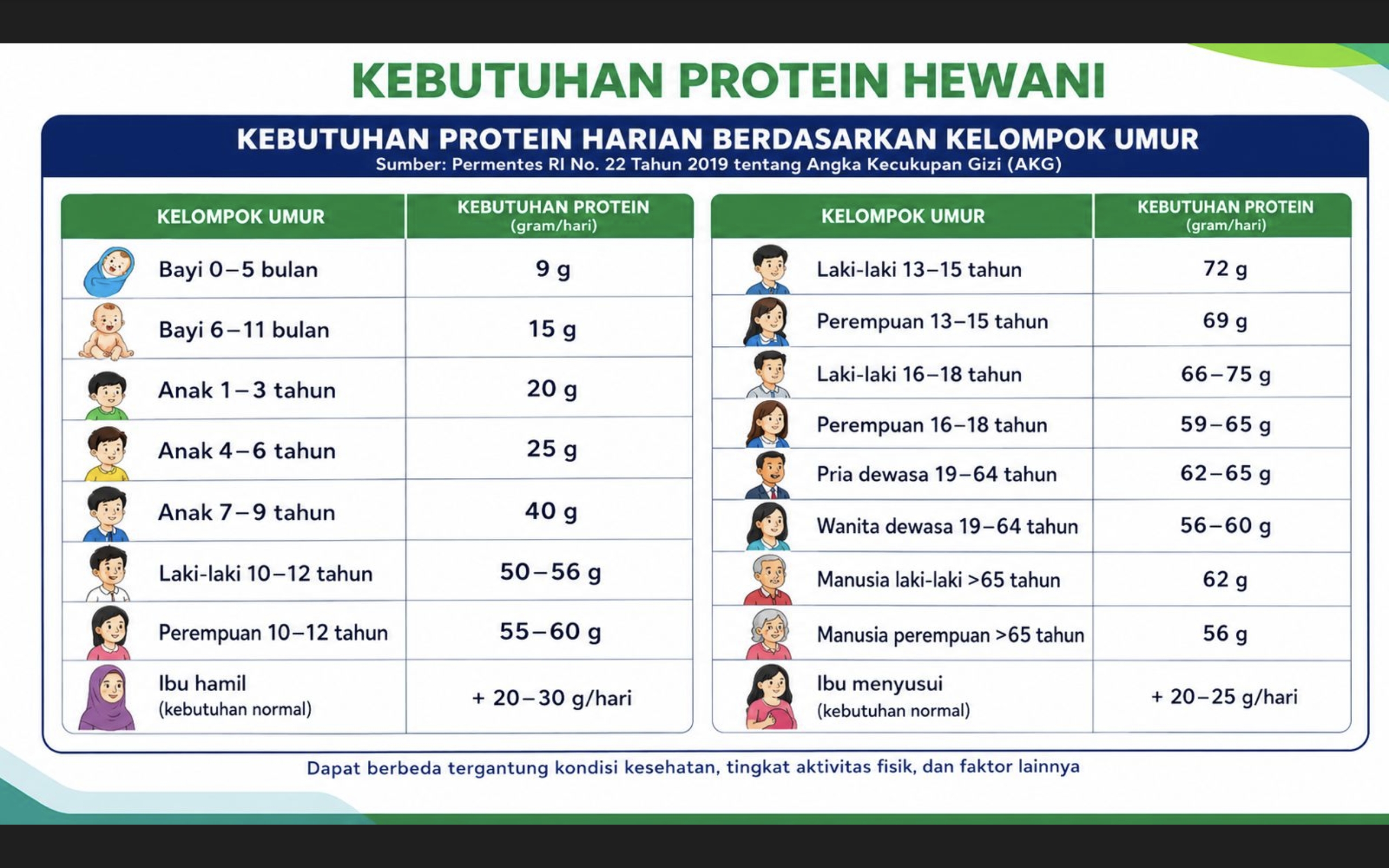
She also pointed out that children’s protein requirements change significantly with age. Based on Ministry of Health Regulation No. 22 of 2019 concerning Recommended Dietary Allowances, children aged 1–3 years require approximately 20 grams of protein per day, increasing to 25 grams at ages 4–6 and rising to 40 grams at ages 7–9.
“Many parents think that because young children eat small portions, their protein requirements must also be small. In fact, during the growth period, children’s protein needs are almost comparable to those of adults,” she explained.
However, changing children’s eating habits cannot be achieved through parental advice alone; an approach that directly influences children’s own way of thinking is also needed. One way to build these habits is through education. Awam Prakoso, founder of Kampung Dongeng, explained when interviewed at PIK 2, Jakarta, on Tuesday (16/6) that storytelling is an effective medium for helping children understand nutritional messages more easily.
“Storytelling is a method, medium, or tool that makes it easier for children to understand because the story is simple, with just one straightforward storyline, but it contains educational messages,” Awam said.
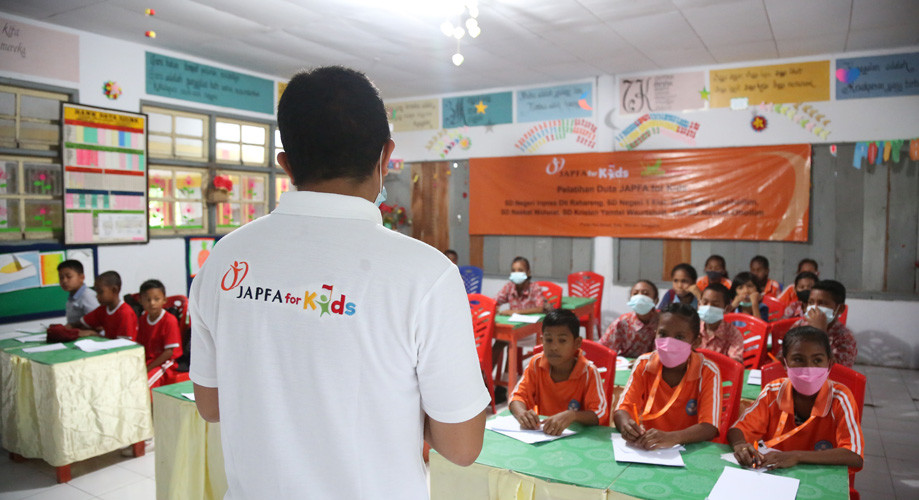 If storytelling is effective at the children’s level, more structured interventions are also needed to reach children directly. Retno Artsanti, Head of Social Investment at JAPFA, explained on Tuesday (19/5) that nutritional issues were also what motivated JAPFA for Kids to continue its program, which has been running since 2008. By 2025, the program had reached 201,056 students, 13,541 teachers, and 1,214 schools across 105 regencies/cities and 28 provinces. Data collected by the JAPFA Social Investment team together with community health centers at nine locations in 2025 showed that 1,034 of 15,498 students, or around 6.7 percent, were still classified as undernourished or severely malnourished.
“We believe that building Indonesia’s future begins with ensuring that children receive proper nutrition and grow up in an environment that supports healthy lifestyles,” she said.
The program strategy is relatively simple: providing one egg every day for six months to students classified as malnourished; weighing and measuring students’ height every month, with the data entered through the JAPFA for Kids application; and promoting healthy lifestyles through JAPFA Healthy Days, including four-pillar balanced nutrition exercises, handwashing with soap, health education, shared packed meals, and training for teachers and parents of malnourished students.
The results are measurable. In 2024, 762 out of 1,479 students classified as undernourished or severely malnourished improved their nutritional status to good, representing 51.5 percent. In 2025, the figure increased to 62.5 percent, with 646 out of 1,034 students improving their nutritional status.
“The program is also complemented by health education, teacher training, parental assistance, and regular monitoring to ensure that its impact can be measured,” Retno said.
What distinguishes JAPFA for Kids from other social assistance programs is its principle of shared contribution. JAPFA does not act solely as a donor, but also as a partner that encourages schools, teachers, parents, and community health centers to contribute.
“In 2026, the program was expanded to nine new locations, including Padang Pariaman, Bintan, South Lampung, Megamendung and Klapanunggal in Bogor, Tegal, Karanganyar, Lamongan, and Sofifi in North Maluku, with a target of assessing the nutritional status of 16,000 students.”
Based on the data and facts presented above, Indonesia’s challenge is apparently no longer how to increase national poultry production, as chicken and egg production is currently relatively in surplus. The greater challenge is ensuring that this high-quality protein actually reaches the stomachs of Indonesian children, regardless of where they live or their families’ economic circumstances. Ultimately, without concern and efforts from all relevant stakeholders, the gap between poultry production data and national nutrition data is likely to persist.
Get more information about Indonesia’s poultry industry by joining our Poultry Indonesia WhatsApp Channel.