



POULTRYINDONESIA, Jakarta – Indonesia’s Ministry of Agriculture (MoA) has reaffirmed its commitment to improving the governance of the national poultry industry by developing a Unified Poultry Breeding Data System (Satu Data Pembibitan Unggas). The initiative is expected to serve as the foundation for more accurate and evidence-based policymaking aimed at maintaining the balance of chicken meat and egg supply, stabilizing market prices, and providing greater business certainty for smallholder poultry farmers.
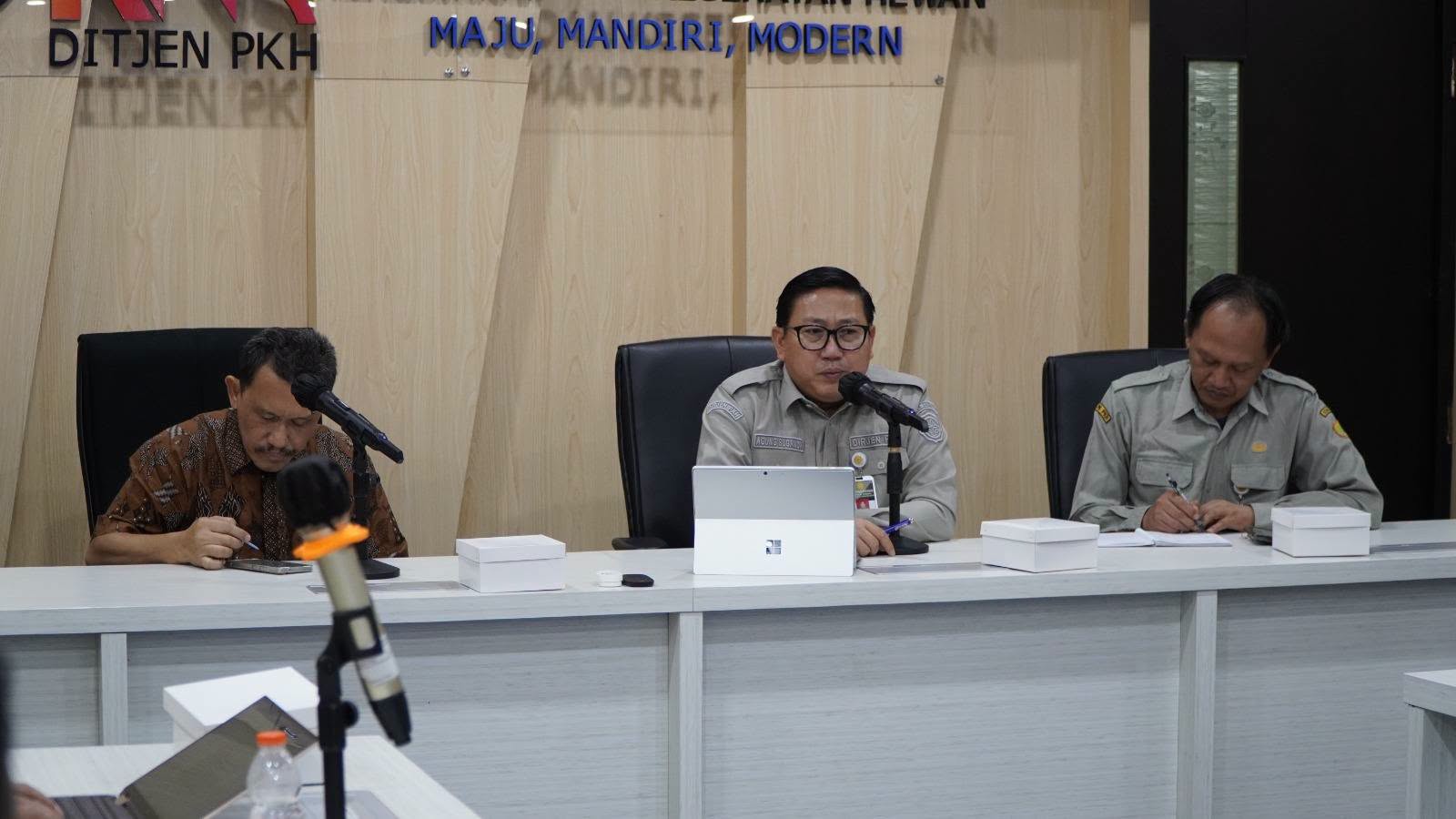
The commitment was conveyed during a meeting between the newly elected Executive Board of the Indonesian Poultry Breeding Companies Association (GPPU) for the 2026–2030 term and the Director General of Livestock and Animal Health at the Ministry of Agriculture. The meeting, held at the ministry’s headquarters on Thursday (July 30, 2026), also served to strengthen collaboration between the government and poultry breeding companies in improving production governance.
Director General of Livestock and Animal Health Agung Suganda emphasized that strengthening the national breeder production data system is one of the government’s top priorities to ensure policies are both accurate and effective. He called on all stakeholders to work together in providing breeder production data through an integrated system.
“The availability of accurate data will enable the government to detect potential oversupply or shortages at an early stage. This will help maintain production balance, stabilize prices, and ensure the sustainability of poultry farming businesses,” Agung said.
According to Agung, the integrated database will also improve the quality of policymaking while strengthening trust among all stakeholders in the governance of Indonesia’s poultry industry. He expects GPPU to play a strategic role as a bridge between the government, breeding companies, and smallholder farmers.
He also reminded industry players that maintaining balance within the poultry sector is a shared responsibility. National interests, he stressed, must take precedence over individual corporate interests so that breeder production planning can be conducted more accurately without creating market disruptions for farmers.
“Government policies will continue to prioritize smallholder farmers. Our objective is to maintain industry balance while providing stronger support for small-scale farmers without overlooking the role of large enterprises. Therefore, we must work together to keep supply and demand in balance so the industry remains healthy,” Agung stated.
Echoing the government’s position, Asrokh Nawawi, Chairman of GPPU for the 2026–2030 term, affirmed the association’s readiness to serve as a strategic partner to the government. The commitment will be demonstrated through the provision of credible industry data, stronger coordination among member companies, and support for policies that promote sustainable industry development while protecting smallholder poultry farmers.
“The poultry industry is currently facing increasingly complex challenges, ranging from fluctuations in live bird prices and high day-old chick (DOC) and feed prices to uncertainty in the global economy. We cannot face these challenges alone,” Asrokh said.