
POULTRYINDONESIA, SURABAYA — Minister of Agriculture (Mentan) Andi Amran Sulaiman has issued a stern warning to feed importers suspected of manipulating prices amid the production cost pressures faced by smallholder farmers. The government has made it clear that it will not tolerate practices that could place additional burdens on farmers. If violations are proven, the companies concerned could have their import licenses revoked.
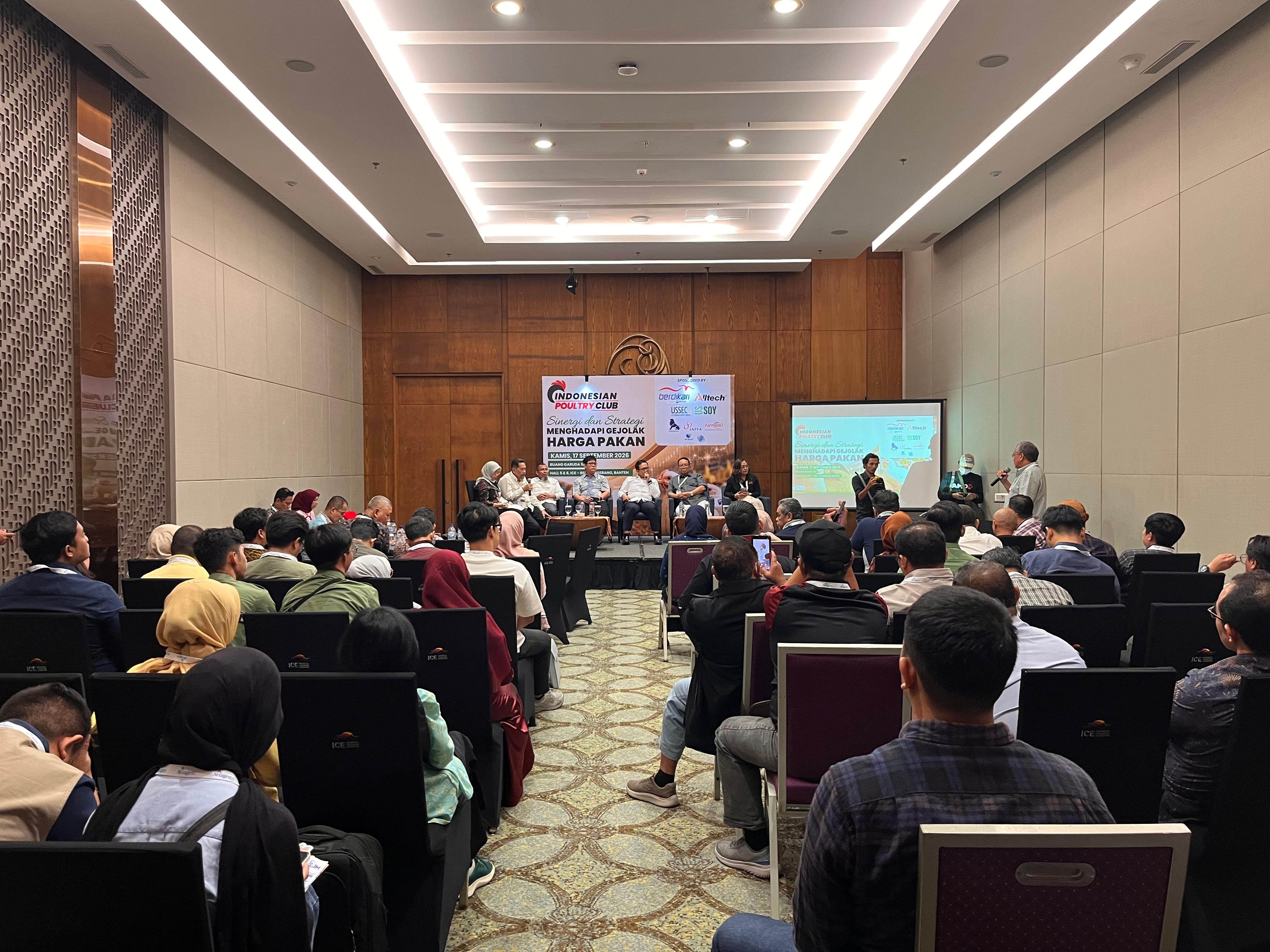
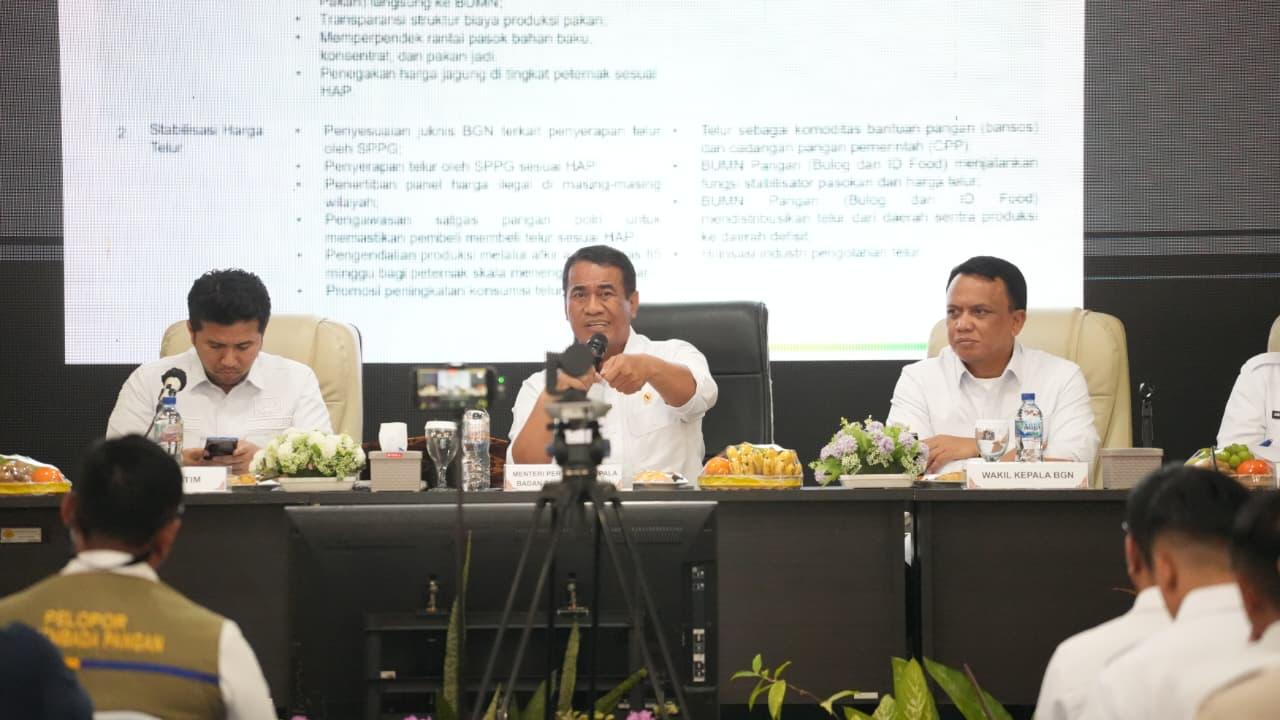
The warning was delivered by Minister Amran during a Poultry Coordination Meeting in Surabaya, East Java, on Tuesday (11/8), after receiving concerns from farmers in several regions regarding high feed prices.
According to him, the government needs to ensure that the feed trade operates properly, considering that feed is one of the main components of production costs and plays a critical role in the sustainability of millions of poultry farms across Indonesia.
Minister Amran said the government had instructed the Food Task Force (Satgas Pangan) to investigate a company suspected of manipulating feed prices. The investigation is scheduled to begin on Wednesday (12/8) to determine whether there have been any violations in the mechanism for setting and trading feed prices in the field.
“There is one company that is suspected of misconduct. We have firmly instructed the Food Task Force to immediately investigate it, God willing, starting tomorrow. They are suspected of manipulating prices. I will not name the company, but God willing, the Food Task Force from the National Police Headquarters will begin the investigation tomorrow. If proven, I will revoke its license,” Minister Amran said.
He emphasized that the government would not arbitrarily intervene in business activities. However, if the investigation uncovers violations, the government will take firm action.
“There must be no manipulation. We will definitely revoke the license. We will not give them any room. Once we revoke it, as long as I remain in office, we will not grant them an import license again,” he stressed.
Minister Amran said the government must balance the interests of businesses and farmers. According to him, businesses remain essential to maintaining the sustainability of the poultry industry, but the government cannot allow parties to reap excessive profits by shifting cost pressures onto smallholder farmers.
“The issue is that feed prices are being increased even though the permits are issued by the Ministry of Agriculture. The importer makes the profit, while we get blamed. What kind of wrongdoing is that? So, that cannot happen. We care about businesses, and we care about smallholder farmers. We are in the middle, figuring out how everyone can grow together,” Minister Amran said.
He stressed that the monitoring measures are part of the government’s efforts to protect the livelihoods of around 3.8 million farmers.
“We have to protect these 3.8 million farmers. Do we want to let them complain every day? That is our responsibility,” he stressed.
Therefore, oversight of the feed trade will be strengthened, particularly concerning businesses suspected of exerting pressure or manipulating prices. The investigation will not only examine price differences between government-set levels and actual market conditions, but will also trace potential administrative violations, monopolistic practices, and criminal offenses.
Feed SPHP to Continue
In addition to addressing suspected price manipulation, the government has confirmed that policies aimed at controlling production costs will continue. Feed prices under the Food Supply and Price Stabilization (Stabilisasi Pasokan dan Harga Pangan / SPHP) scheme distributed by Bulog are confirmed to remain in place through the end of the year.
The policy is expected to provide greater certainty for farmers in running their businesses amid continued production cost pressures.
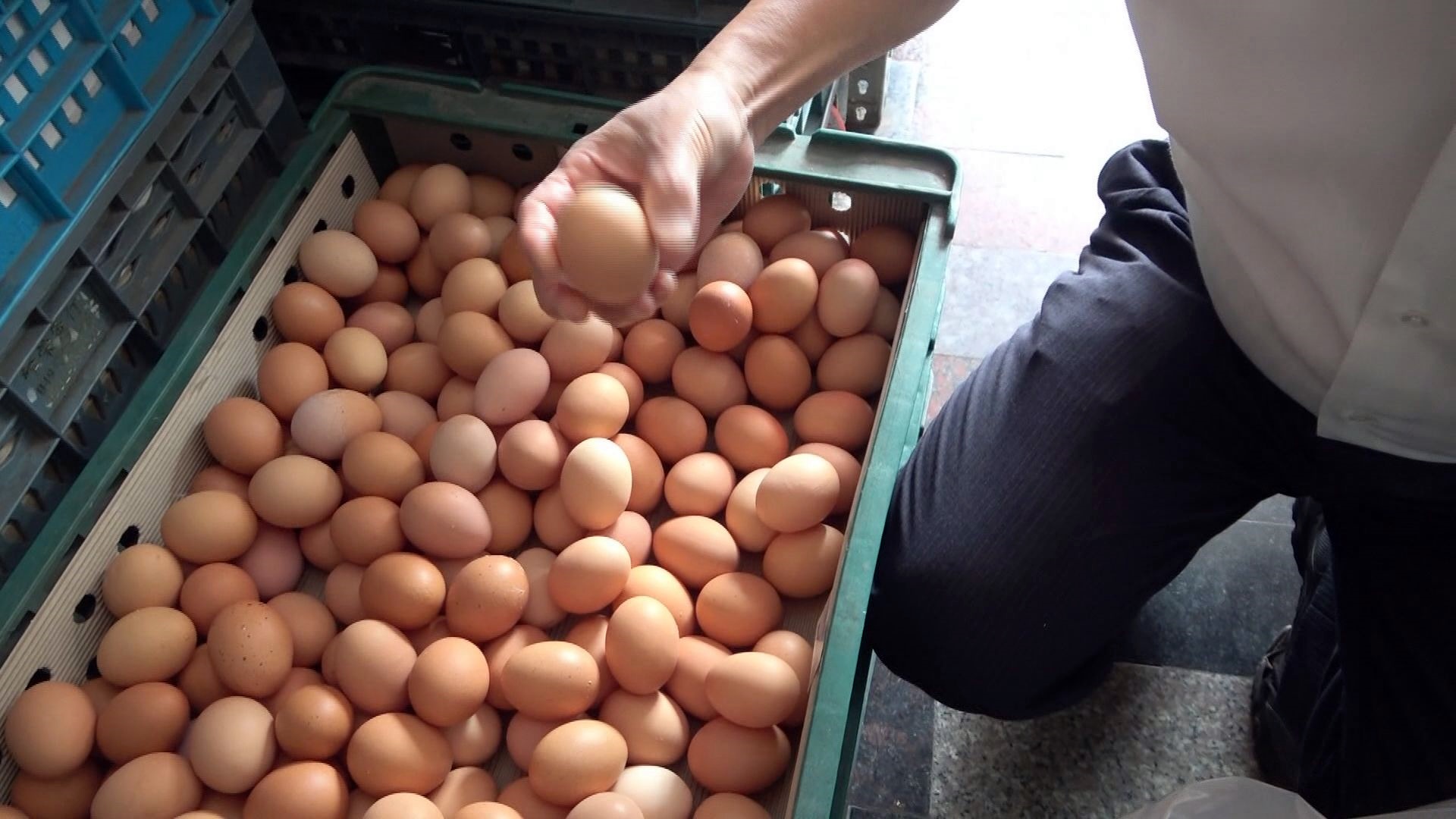
However, feed price controls need to go hand in hand with certainty over egg prices at the farm level. The government does not want policies to address only the input side while farmers continue to face pressure when selling their products.
“We also agree that we are responsible for the HPP, the government purchase price for eggs, but we also have to keep feed prices from becoming too high. Don’t take advantage of people’s difficulties,” Minister Amran said.
MBG Egg Procurement Strengthened
The government is also strengthening egg procurement through Nutrition Fulfillment Service Units (Satuan Pelayanan Pemenuhan Gizi / SPPG) to support the sustainability of the Free Nutritious Meals (MBG) Program.
Minister Amran said that SPPG egg procurement is already governed by instructions and technical guidelines that must be implemented.
“There are already instructions and an official letter stating that procurement must be carried out in accordance with the technical guidelines. We are doing this for the sake of our farmers throughout Indonesia,” he said.
According to Minister Amran, policies on feed monitoring and egg procurement are part of efforts to maintain a healthy and sustainable poultry supply chain.
The government, he said, will ensure that businesses operating properly continue to have room to grow. Conversely, those proven to have violated the rules will face action in accordance with applicable regulations.
“As the government, we must be firm. Those who violate the rules must be dealt with. The law is supreme,” he concluded.
Food Task Force to Take Action
Reinforcing Minister Amran’s statement, Police Commissioner Derry Agung Wijaya of the Food Task Force said the agency would intensify oversight of businesses and farmers involved in the poultry sector.
According to Derry, every report will first be verified and investigated through field inspections before the nature of any violation is determined.
“Not every report means that there is a criminal element, but we conduct checks first. A difference between government-set prices and market conditions does not automatically constitute a criminal offense. However, if there is price suppression, we will investigate whether or not it contains elements of a criminal offense,” Derry said.
He explained that if violations are identified during the investigation, the handling of the case will depend on the type of violation and the authority of the relevant institution.
Administrative violations may be handled in accordance with applicable regulations. Suspected monopolistic practices may be referred to the Business Competition Supervisory Commission (KPPU), while findings containing criminal elements will be processed in accordance with applicable law.
Get more information about Indonesia’s poultry industry by joining our Poultry Indonesia WhatsApp Channel.