



POULTRYINDONESIA, Jakarta – Animal welfare has become an increasingly important aspect of global livestock development. Beyond ethical considerations, the implementation of animal welfare practices is recognized for its contribution to productivity, food safety, public health, and the international competitiveness of livestock products. In response to these developments, Indonesia’s Ministry of Agriculture continues to strengthen animal welfare implementation through enhanced regulations and capacity building for stakeholders across the livestock sector.
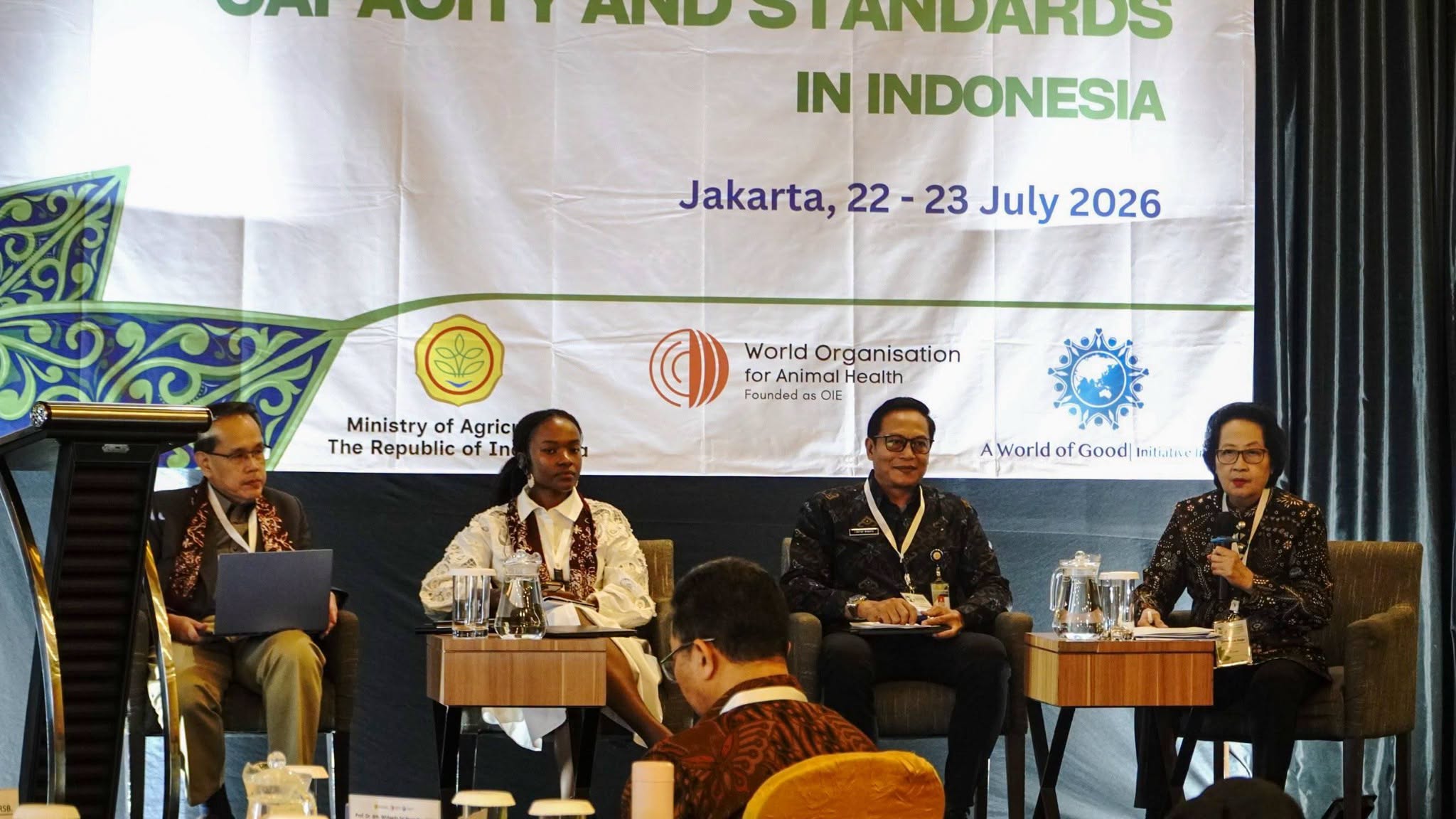
I Ketut Wirata, Director of Veterinary Public Health at the Directorate General of Livestock and Animal Health Services (DGLAHS), stated that Indonesia currently faces both challenges and opportunities in implementing animal welfare standards. Globally, the welfare of layer and broiler chickens has become a major concern as consumers and international markets increasingly demand products originating from responsible production systems. Domestically, challenges include Indonesia’s vast geographical area, disparities in regional capacities, and the need for adequate human resources and supporting infrastructure.
According to Wirata, the government has responded by issuing Minister of Agriculture Regulation No. 32 of 2025 on Animal Welfare Implementation. The regulation serves as Indonesia’s national framework for animal welfare, adopting the principles of the World Organisation for Animal Health (WOAH) while taking into account the country’s local conditions and wisdom.
The regulation governs animal welfare practices across multiple sectors, including livestock farming, animal transportation, slaughterhouses and poultry slaughterhouses, laboratory animals, and companion animals. Specifically for the poultry sector, it covers both broiler and layer operations and introduces a voluntary animal welfare certification scheme for poultry farms and poultry slaughterhouses. Although voluntary, the certification is expected to strengthen market confidence in Indonesian livestock products.
Wirata explained that Indonesia’s animal welfare implementation is based on the internationally recognized Five Freedoms:
-
Freedom from hunger and thirst;
-
Freedom from pain, injury, and disease;
-
Freedom from discomfort;
-
Freedom from fear and distress; and
-
Freedom to express normal behavior.
These principles apply throughout every stage of animal management, from rearing and housing to transportation and slaughter.
Meanwhile, Prof. Zulkifli Idrus of the Institute of Tropical Agriculture and Food Security (ITAFoS), Universiti Putra Malaysia, emphasized that poultry welfare is no longer merely an ethical issue but has become a key business strategy for the modern poultry industry. He noted that Southeast Asian countries, including Indonesia, play a strategic role in supplying animal protein, making improvements in poultry welfare directly relevant to regional food security.
“Good animal welfare means good farming. It is good for poultry, good for farmers, good for consumers, and good for a sustainable food system,” he said.
He explained that over the past several decades, the poultry industry has expanded through production intensification to meet growing global food demand. However, increased productivity should never come at the expense of animal welfare, as birds experiencing stress or raised under poor conditions tend to exhibit lower production performance and greater susceptibility to disease.
According to Zulkifli, poultry welfare extends beyond simply keeping birds free from disease. It also encompasses physical and mental well-being, enabling birds to live comfortably and express their natural behaviors. Today, the industry increasingly adopts the Five Domains Model, which covers nutrition, physical environment, health, behavioral interactions, and the animals’ mental state.
In practice, poultry welfare is achieved through adequate feed and water supply, proper ventilation and temperature control, effective flock health management, humane handling, and slaughter practices that comply with humane slaughter principles. He noted that these practices not only improve bird welfare but also enhance production efficiency. Chickens raised in comfortable conditions demonstrate better feed conversion, lower mortality, higher product quality, and reduced dependence on antibiotics.
Zulkifli also pointed out that every production system presents its own challenges. For broilers, key concerns include managing heat stress, maintaining litter quality, ensuring proper ventilation, and preventing leg health problems. For laying hens, both conventional cage systems and cage-free systems have distinct welfare challenges that require appropriate management.
“There is no perfect production system. What matters most is that every system continuously improves animal welfare outcomes,” he said.